The armband tattoo style has deep and varied origins that span different cultures, artistic movements, and symbolic meanings. This tattoo style typically wraps around the upper or lower arm like a “band” or “bracelet.” Historically, the armband has held specific significance across cultures, serving as a symbol of identity, spirituality, and personal expression. Today, it has evolved to embrace both traditional and contemporary designs, often blending cultural symbolism with modern aesthetics.
Cultural Origins
Polynesian and Samoan Cultures: In Polynesian and Samoan traditions, tattoos are sacred forms of body art that carry significant cultural value. Known as Pe'a (for men) or Malu (for women), these tattoos often cover large portions of the body, with patterns that may include armband-like designs around the biceps. The patterns and shapes represent family lineage, social status, and connection to one’s heritage. Armband tattoos in these cultures often contain symbols of nature, such as waves or animals, which indicate courage, protection, or respect for ancestors. Traditionally, these tattoos were painful and time-consuming to apply, requiring deep spiritual commitment.

Celtic and Norse Influences: In Celtic and Norse cultures, armband-like designs often feature intricate knotwork, braids, or stylized animals. Celtic knotwork, which may be used to create a continuous armband, represents eternity, interconnectedness, and the cyclical nature of life and death. Norse designs, meanwhile, sometimes depict mythological creatures or runes, symbolizing strength, protection, or guidance from gods. These armband tattoos often echo the look of ancient jewelry, such as torcs or arm rings, worn by warriors and nobility.

Native American Traditions: In some Native American cultures, armband tattoos are also common. Designs may incorporate feathers, arrows, or animal motifs to represent protection, hunting skills, or spiritual connection to nature. The circle or band shape aligns with the Native American view of life as a continuous journey with no beginning or end. Many contemporary designs draw inspiration from these symbols, paying homage to their spiritual significance.

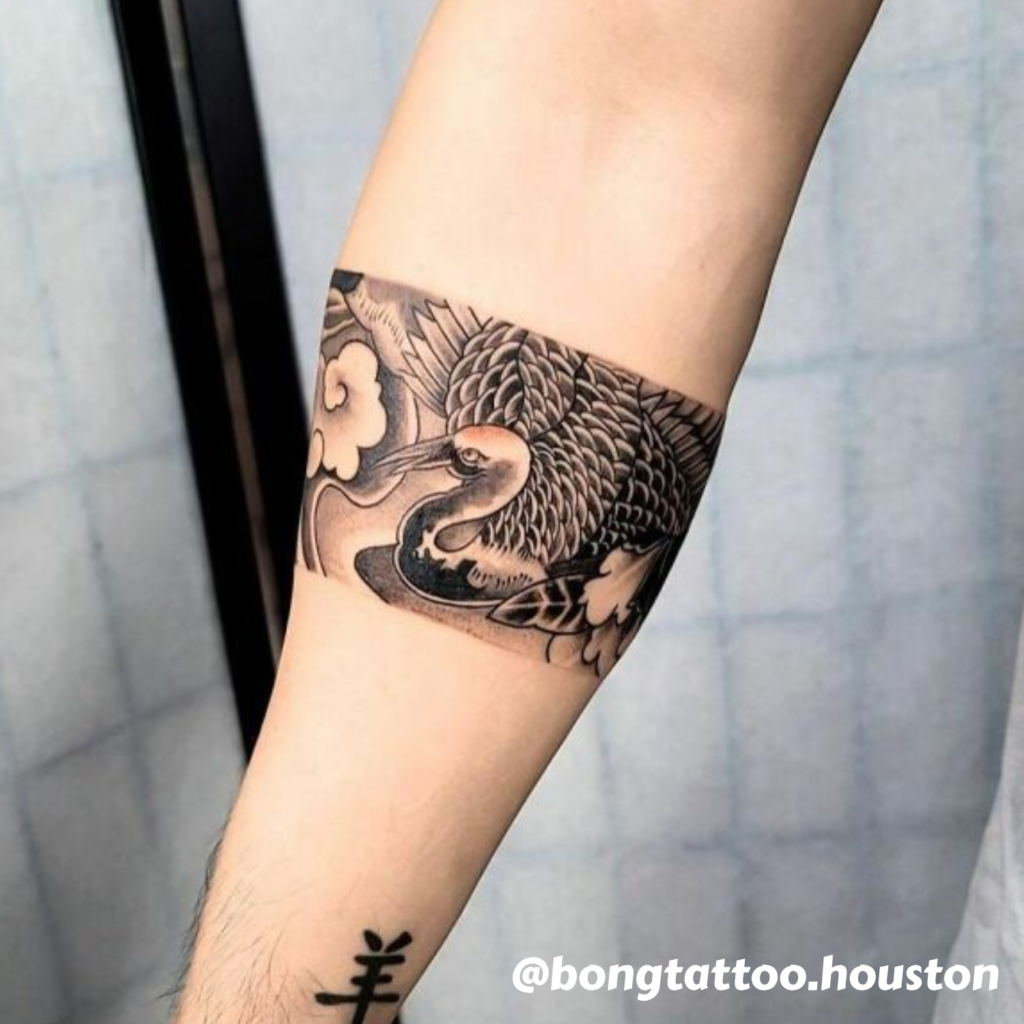
Japanese Irezumi: Japanese tattoo art, known as Irezumi, incorporates bands or patterns around the arms as part of larger, full-body tattoos. Japanese armbands often feature koi fish, dragons, cherry blossoms, or wave motifs, with each element symbolizing virtues like perseverance, bravery, or the transient beauty of life. In Japanese tattooing, armbands may be seen as part of a full sleeve design, where different motifs merge fluidly around the arm.
Modern Evolution and Styles
As tattoos became popularized in the Western world during the late 20th century, armband tattoos began to shift from highly symbolic, traditional motifs to more versatile and diverse designs. The armband style took on a life of its own in the tattoo community, often favored for its balanced placement on the body and the clean, continuous line it creates around the arm. Some popular armband styles today include:
Blackout Bands: Blackout armbands are thick, solid black bands that wrap around the arm. This style became popular as a form of "cover-up" tattooing to mask unwanted or faded ink. Blackout bands are also used as memorials, symbolizing mourning or loss in some cultures. The simplicity and boldness of this design often make it visually striking.

Geometric and Minimalist Bands: As minimalist tattoo styles gained popularity, armband tattoos also embraced simple, geometric patterns. Thin lines, dots, and shapes create elegant, modern designs that appeal to those looking for a clean, understated look. This style is particularly popular among younger generations, who appreciate the balance of tradition and modern aesthetics.

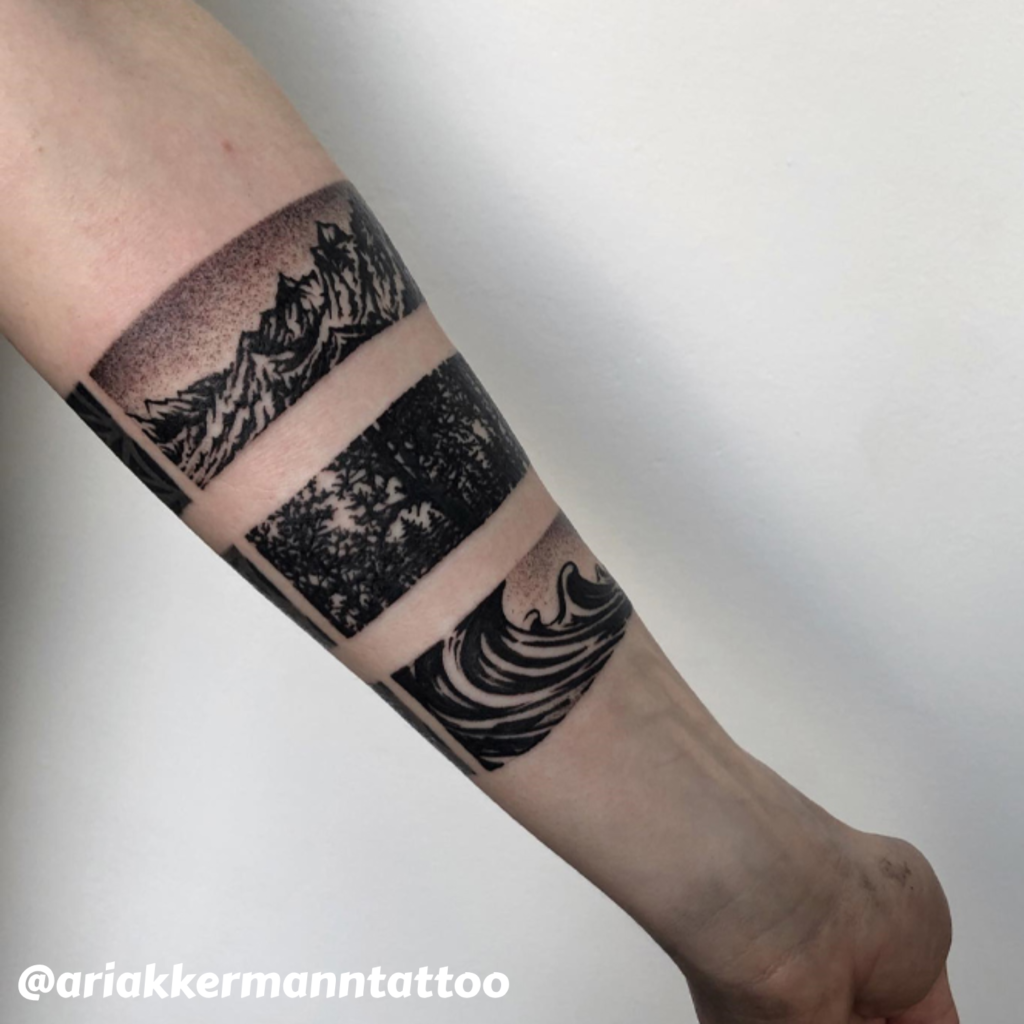
Nature and Landscape Bands: Some armband tattoos feature continuous natural scenes, such as mountains, forests, or waves, wrapping around the arm. These designs are popular among nature lovers, as they represent a connection to the environment and are often inspired by scenic landscapes. This style is usually done in fine-line or dot-work to achieve realistic detailing within the narrow band.

Tribal-Inspired Bands: Inspired by traditional tribal tattooing, modern tribal armbands typically incorporate bold, black lines and curves that resemble ancient designs but often blend influences from multiple cultures. While these designs honor indigenous art, they are sometimes controversial when done without cultural sensitivity, as they can unintentionally misappropriate significant cultural symbols.

Mandala and Dot Work: Mandala patterns, often influenced by Hindu and Buddhist symbols, create intricate, circular designs that can form armbands. Mandalas represent balance, harmony, and the universe’s infinite nature, making them popular among those seeking spiritually meaningful tattoos. Dot-work tattoos, in which images are created using tiny dots instead of lines, lend an intricate, almost lace-like texture to mandala or geometric armband tattoos.
Symbolism and Personal Meaning
The symbolism of armband tattoos varies widely depending on the style and cultural references chosen by the wearer. Common meanings include:
Continuity and Eternity: Armband tattoos, as closed circles around the arm, symbolize the concept of infinity or the cyclical nature of life.
Strength and Protection: In many cultures, armband tattoos are associated with warriors and strength, serving as protection symbols.
Memorial and Mourning: Some choose armband tattoos as a tribute to loved ones who have passed away. Solid black bands or designs with initials, dates, or other meaningful symbols are often used for this purpose.
Spirituality and Connection: Many designs are chosen for their cultural or spiritual resonance, serving as personal reminders of one’s beliefs or heritage.
Armband Tattoos in Contemporary Tattoo Culture
In recent years, the popularity of armband tattoos has continued to grow, particularly with the rise of minimalism and the ongoing fascination with tribal, geometric, and blackout tattoos. Social media and tattoo conventions have made it easier for artists and wearers to share armband designs from different styles and traditions, leading to more fusion and personalization within the style. Although traditional armband tattoos carry deep, culturally rooted meanings, the style’s versatility has made it accessible to modern tattoo enthusiasts seeking meaningful or aesthetically pleasing body art.
In conclusion, armband tattoos represent a timeless and adaptable tattoo style, deeply rooted in various cultural histories while still thriving in the contemporary tattoo world. Whether chosen for personal significance, aesthetic appeal, or as a tribute to one’s heritage, the armband tattoo is a powerful and versatile form of self-expression.