In this article, we delve into the stylistic elements and influences shaping the world of Japanese tattooing.
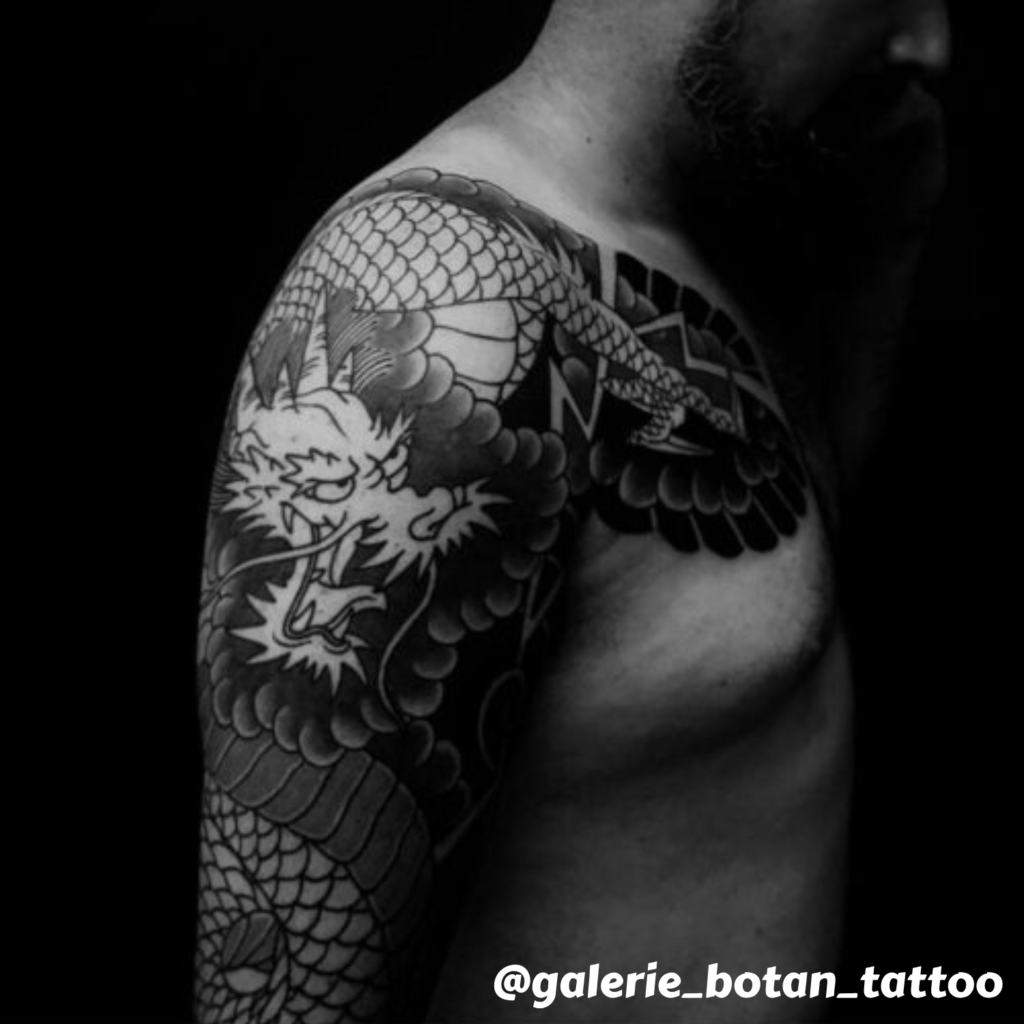
Aesthetics: The Japanese tattoo style, commonly known as Irezumi, Wabori, or Harimono, is a traditional form originating in Japan. Recognizable by its distinctive motifs, bold shading, and clarity, this style is traditionally applied as a full-body suit, covering legs, arms, torso, and back. The unique feature is a strip of untouched skin left visible from collarline to navel, ensuring tattoos remain concealed under a kimono.
Motifs & Subject Matter: The aesthetics and subject matter of Japanese tattoos are said to have evolved from woodblock prints of the Ukiyo-e era in Japan. Ukiyo-e artworks, known as Pictures of the Floating World, have deeply influenced Japanese art and culture. Colorful, with flattened perspectives and illustrative linework, Ukiyo-e has not only impacted European painters like Monet and Van Gogh but also influenced movements like Art Nouveau and Japanese tattooing.
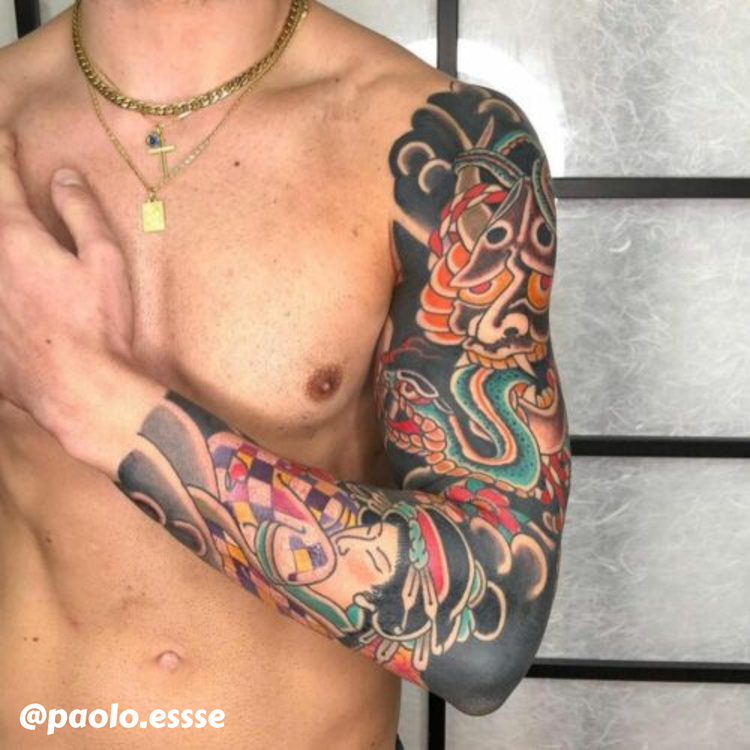
Classic Ukiyo-e motifs seen in Japanese tattoos today include figures from Japanese folklore, masks, Buddhist deities, samurai, tigers, snakes, koi fish, and mythical creatures such as dragons, kirin, kitsune, baku, foo dogs, and phoenix. These motifs can stand alone or be paired with flora or other elements, with meanings depending on colors, placement, and accompanying images.
Tools Used: In the early days of Japanese tattooing, bodywork was manually done using a long bamboo or metal tool with a needle grouping. While modern artists often use machines, some continue the tradition of non-electric hand application, known as Tebori. Those seeking an authentic Japanese tebori tattoo can explore options here and here.
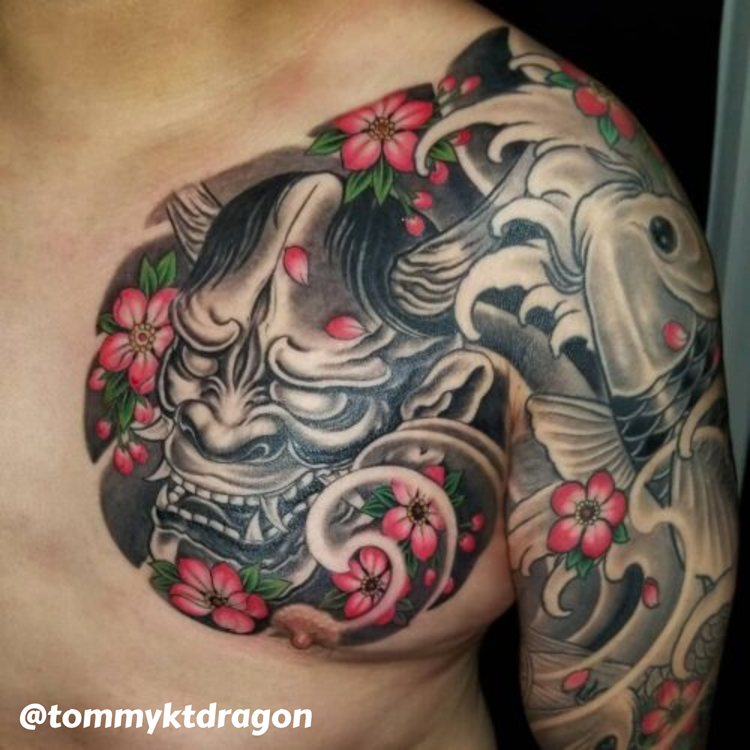
Today, Japanese-style tattoos are embraced not only by the Japanese but by diverse tattoo collectors for their beauty, flowing composition, and rich symbolism. If you’re searching for a tattoo artist specializing in this style, we’re here to assist you in finding the right match for the job.