Origins of Manga Art and Influence on Tattoo Culture

Manga, a style of Japanese comic art, has become a significant cultural export and is renowned for its distinct, expressive illustrations and dynamic storytelling. The roots of manga can be traced back to ancient Japanese art forms, but it truly began to take shape during the Meiji period (1868-1912), when Western influences were introduced to Japan. Manga as we recognize it today emerged in the early 20th century, with artists like Osamu Tezuka, widely known as the “God of Manga,” playing a crucial role in defining the modern style.
Manga features highly stylized characters with exaggerated facial expressions, large eyes, and distinct outlines. The artistic techniques used in manga emphasize strong black-and-white contrasts, bold linework, and high levels of detail in both the characters and backgrounds. Manga covers a broad range of genres, from action and adventure to romance, fantasy, and horror, making it appealing to a diverse audience.
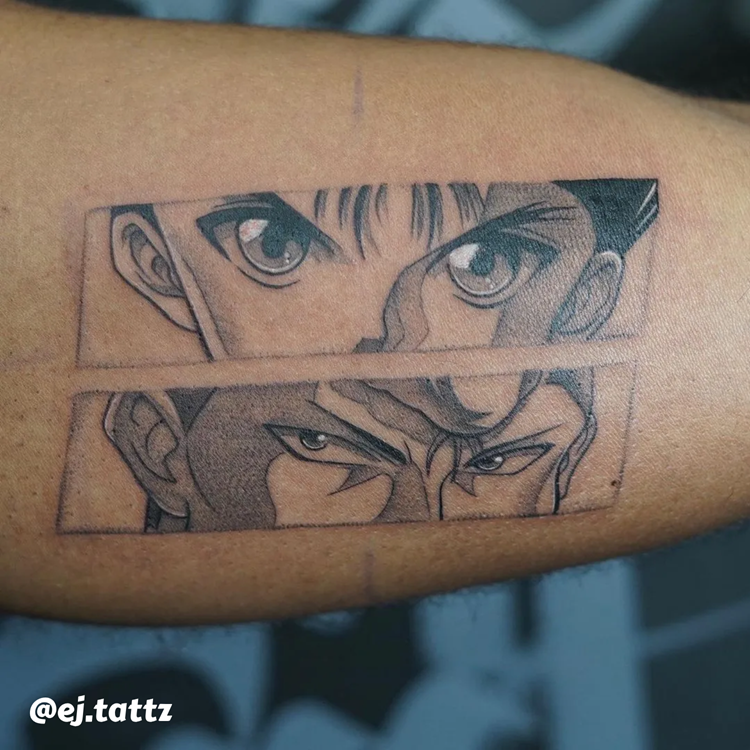
Emergence of Manga in Tattoo Culture
The fusion of manga and tattoo culture began to develop in the 1990s and early 2000s as manga’s global popularity soared, particularly through anime adaptations of popular manga series. Fans of manga and anime started to seek ways to express their love for these stories and characters through tattoos.
In Japan, traditional tattooing (known as irezumi) had a long and rich history, closely associated with both the yakuza (Japanese organized crime) and later with more mainstream cultural practices. Irezumi designs often included elements of mythology, folklore, and nature, such as dragons, tigers, and koi fish, and were known for their detailed, colorful, and bold designs. Over time, modern Japanese tattoo artists began incorporating elements of manga and anime into their tattoos, blending these new pop culture influences with traditional irezumi techniques. This led to the creation of a distinct tattoo style that is now recognized as Manga tattoo style.
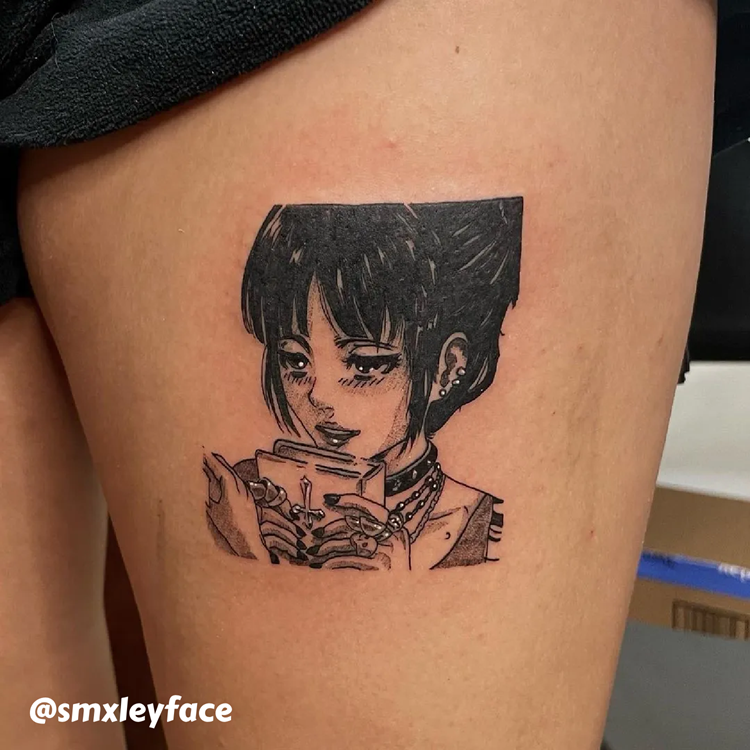
Manga Tattoo Style Characteristics
The manga tattoo style combines elements of traditional Japanese tattooing with the distinct visual language of manga. Key features of manga tattoos include:
- Exaggerated Expressions: Manga characters are known for their emotive expressions, which tattoo artists replicate in tattoo form. These can range from joyful to sorrowful, adding an element of drama to the design.
- Dynamic Poses: Manga art often depicts characters in action-packed, exaggerated poses, and this dynamism is translated into tattoos, creating movement and energy in the design.
- Detailed Linework: Manga artwork features highly detailed and clean lines, which tattoo artists mimic in their designs. The bold outlines of characters or objects are often emphasized in manga tattoos.
- Black-and-White or Limited Color Palette: While traditional tattoos often use a wide range of colors, manga tattoos tend to be either black-and-white (in keeping with the original style of manga) or feature limited use of color, focusing on the contrast between the black ink and skin tone.
- Incorporation of Manga Symbols and Text: Sometimes, tattoos feature kanji characters, onomatopoeic words (like “BANG!” or “POW!”) from manga panels, or other iconic symbols from manga, enhancing the narrative element of the tattoo.
Popularity of Manga Tattoos
Manga tattoos are especially popular among fans of anime and manga culture, and they are often chosen by individuals who want to express their love for a specific series or character. These tattoos can range from smaller, more personal designs—such as a tattoo of a character’s face or an iconic scene from a manga—to large, elaborate full-body tattoos that blend manga with traditional Japanese tattoo elements.
One of the most popular manga genres in the tattoo world is shonen, which targets a young male demographic and is often filled with action-packed stories. Characters from famous manga such as Naruto, Dragon Ball, One Piece, and Attack on Titan are frequently tattooed. Female characters from shoujo manga, which targets a female audience and often includes romantic or emotional plots, are also common in tattoo designs.
Manga tattoos can also be deeply personal, with fans choosing tattoos that reflect their favorite characters or moments that have had a significant impact on their lives. For example, a person might get a tattoo of a character that embodies personal growth, strength, or resilience, or a moment from a story that resonates with their own experiences.
Influence on Global Tattoo Culture
Manga tattoos have not been confined to Japan. As global interest in anime and manga grew, the tattoo style began to spread to countries around the world, especially in the United States, Europe, and Latin America. The global fanbase for manga and anime has driven tattoo artists to experiment with the style, blending it with other tattoo techniques, such as realism or illustrative styles, while still retaining the core elements that define manga tattoos.
In addition to character-based tattoos, some artists also incorporate manga panels or manga-inspired backgrounds into their work. These tattoos often capture the feeling of a scene, with a focus on movement, action, and expression, as seen in the dynamic panel layouts of manga.
Modern Trends in Manga Tattoos
In recent years, there has been a rise in more contemporary adaptations of manga tattoos, with influences from digital art and contemporary animation styles. Some artists blend manga-inspired designs with new techniques, such as watercolor effects or abstract elements, creating tattoos that look more like modern graphic art.
Another significant trend is the cross-over between manga tattoos and other forms of pop culture, such as video games or Western comics. Characters from Super Mario, Batman, and Spiderman have been reinterpreted through the manga lens, creating unique hybrid tattoos that combine Western and Eastern art styles.
Conclusion
Manga tattoos have evolved into a popular and recognizable style within the tattoo world, influenced by Japan’s deep tradition of irezumi and the global rise of anime and manga. These tattoos offer a visual representation of beloved characters, stories, and themes, and they continue to evolve as both the worlds of manga and tattooing expand and adapt to new trends. Whether reflecting the nostalgia of childhood favorites or capturing the emotions and aesthetics of specific manga stories, the manga tattoo style remains a dynamic and beloved form of self-expression for many.