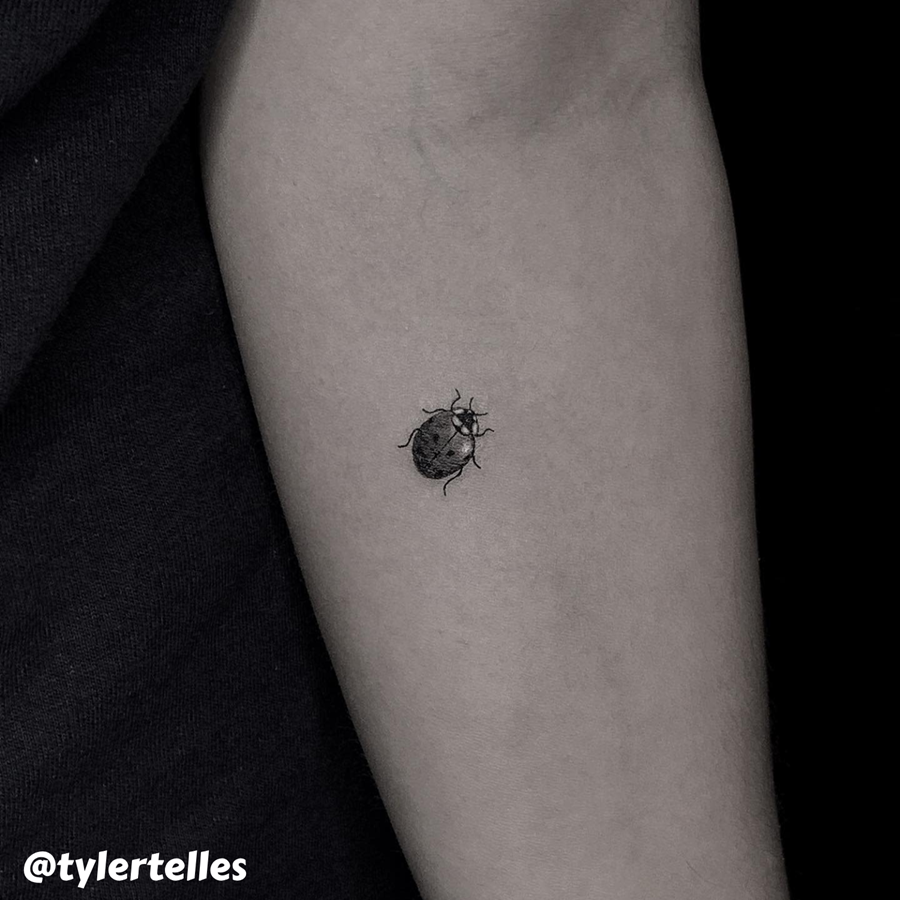
Micro Realism is a tattoo style characterized by highly detailed, realistic imagery that is executed in a very small and delicate format. This style focuses on precision and intricate detail, often using fine lines and shading to create lifelike depictions of portraits, animals, nature, and various objects. Unlike traditional realism, which typically covers larger areas of skin, micro realism tattoos are designed to be compact, fitting into smaller spaces on the body like the hands, fingers, neck, or behind the ear.
Origins and Evolution
Micro Realism is a relatively modern tattoo style, though its roots can be traced back to the broader concept of realism in tattoos, which emerged in the late 19th and early 20th centuries. Tattoo artists, particularly in Western cultures, began to experiment with realistic depictions of people, animals, and scenes, moving away from the more traditional designs like tribal patterns, sailor tattoos, and Japanese motifs.
While realism as a concept started gaining popularity in the 20th century, micro realism began to carve out its distinct identity in the 1990s and 2000s as tattoo technology advanced. The key to this development was the evolution of tattoo machines, needles, and inks, which allowed for finer details to be achieved. The introduction of smaller needles, combined with a greater focus on technique, enabled tattoo artists to produce highly detailed tattoos on much smaller canvases.

Key Characteristics of Micro Realism
Micro Realism tattoos often feature the following characteristics:
- Fine Details: Artists use thin, precise lines to capture the smallest details in their designs. This can include facial features, textures, shadows, and even tiny elements like the fine hairs of an animal’s fur or the subtle veins on a leaf.
- Small Size: The hallmark of micro realism is the tiny size of the tattoos. These designs are often no larger than a few inches, making them perfect for areas of the body with limited space. Despite their size, they maintain a high degree of realism.
- Use of Light and Shadow: Light and shadow play a crucial role in micro realism tattoos. To create depth and dimension in a small space, tattoo artists must skillfully apply shading to mimic the natural interplay of light, which is essential to realism.
- Lifelike Images: The images often aim to be as lifelike as possible, resembling photographs or fine art. Portraits of people or animals, landscapes, flowers, and even intricate objects like keys or watches are often rendered with remarkable precision.
Evolution of Techniques and Tools
As tattoo technology progressed, the ability to create detailed and small tattoos increased. The development of rotary tattoo machines in the late 20th century helped artists achieve finer lines and smoother shading compared to the older coil machines. Additionally, micro-needles became available, allowing for the creation of tiny, detailed lines that could reproduce delicate elements like eyelashes or the texture of a pet’s fur.
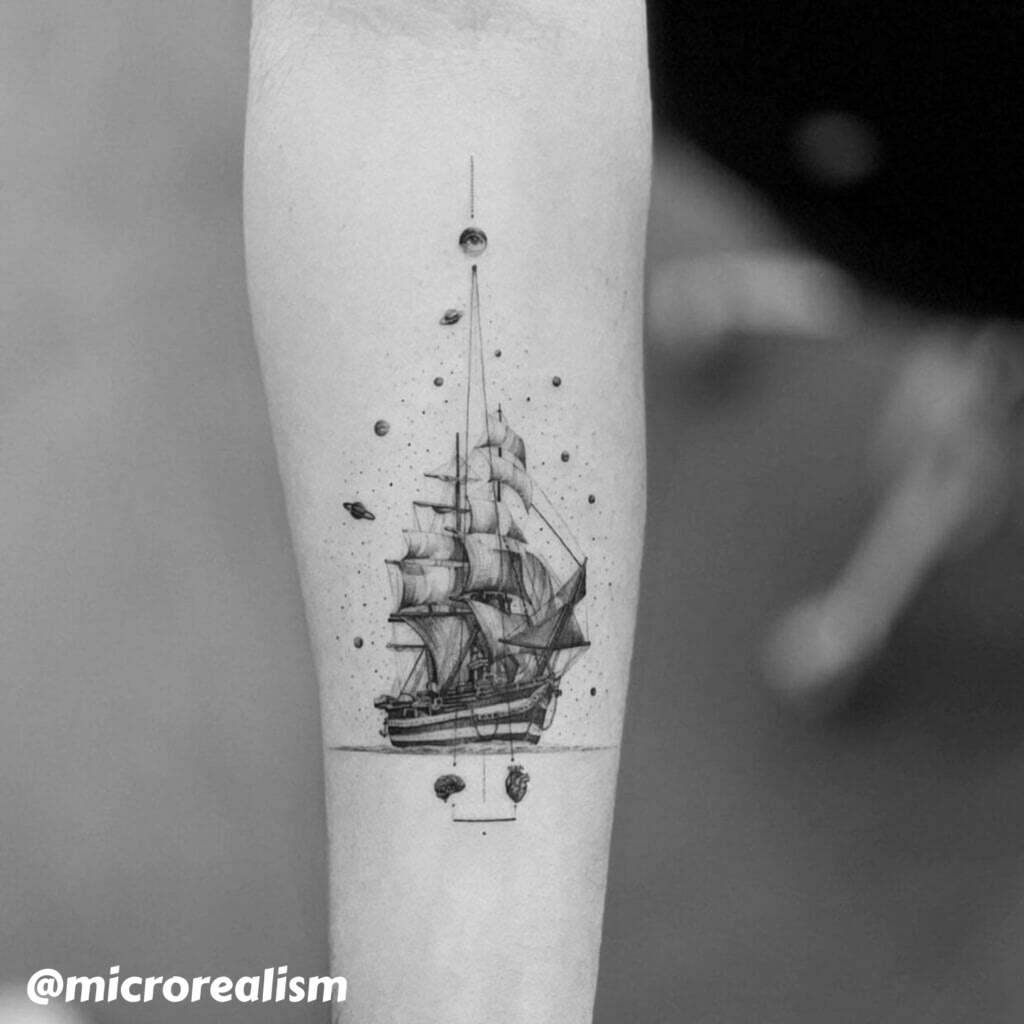
The improvement in tattoo inks also contributed to the rise of micro realism. Lighter, more vibrant inks enabled artists to capture subtle gradients and realistic colors. Additionally, the consistency and quality of modern inks allowed tattoos to maintain their crispness and detail over time, preventing blurring that might have been more common with earlier tattoo pigments.
Influential Artists
Several tattoo artists are credited with popularizing and advancing the style of micro realism. Among the most prominent is Chaim Machlev, a Berlin-based tattoo artist who is known for his precise, geometric tattoos, which blend abstract designs with elements of realism. However, in terms of purely “micro realism,” other notable figures include Xoil from France, who is renowned for his ultra-realistic portraits and ability to work on smaller spaces without compromising the details.
Another significant name in the world of micro realism is Dirk Vervaet from Belgium. His detailed, portrait-style tattoos are often created on small areas of the body, using fine lines and shading to depict lifelike images. Vervaet is known for his work with black and gray ink, creating depth and contrast with minimal color.
Micro Realism Today
Today, micro realism has become a popular style among tattoo enthusiasts, especially those seeking to have meaningful and personal designs placed in small spaces. With social media platforms like Instagram, artists can showcase their work to a global audience, further propelling the popularity of micro realism tattoos.
There is a growing demand for portraits of loved ones, pets, and celebrities in micro realism style. The ability to capture the essence of a person or animal in such a small space is considered an impressive feat of skill. Some micro realism artists have also expanded their work into more experimental areas, creating hyper-realistic depictions of surreal or fantasy scenes.
Challenges of Micro Realism
While micro realism tattoos are highly sought after, they present a significant challenge for tattoo artists. The small size requires exceptional precision and a steady hand. Additionally, the tattoo must be carefully executed to ensure that the details remain sharp over time. Small tattoos tend to blur or fade more quickly, so artists must be particularly cautious with the placement of lines and the application of shading.
In addition, skin texture and body placement play a critical role in the final result. Some areas of the body, like the fingers or elbows, may not hold fine details as well as smoother, more uniform areas like the upper arm or back.
Conclusion
Micro realism is a tattoo style that demands incredible skill and precision, combining the intricacy of fine art with the permanent nature of body ink. It’s a modern evolution of traditional realism, made possible by advances in tattoo technology and technique. As its popularity continues to grow, it’s clear that micro realism will remain a dynamic and influential style within the tattoo world for years to come, offering both tattoo artists and enthusiasts the opportunity to celebrate art in its most miniature form.