Black & Grey tattooing is one of the most revered and influential styles in the tattoo world, celebrated for its versatility, detail, and expressive power. This style, characterized by the use of black ink to create shades of gray through dilution techniques, has roots that stretch back centuries and holds a fascinating blend of cultural, artistic, and technical history. Here’s an in-depth look at how Black & Grey tattooing evolved into a dominant style in the tattoo community.
Origins and Early Influences

While Black & Grey tattooing has become most widely associated with Western tattoo culture, its techniques and principles can be traced back to several ancient cultures. The art of shading and creating images with a monochromatic palette goes back to early Polynesian and Asian tattoo practices, where tattoo artists would often use black ink derived from soot or charcoal. These early forms of tattooing were primarily performed as rituals or symbols of social standing rather than for artistic expression.
Black & Grey tattooing as we know it today, however, has its roots in American prison tattooing of the 20th century. Inmates, often lacking access to colored ink and conventional tattooing tools, would innovate by using single-needle machines fashioned from everyday items like ballpoint pens, guitar strings, and motorized devices from cassette players. For ink, they’d burn ash or use soot mixed with water to create black ink. This restriction to black ink led to the development of complex shading techniques to add depth and dimension to their designs. The style became popular within prisons, and eventually, it began to influence tattoo culture on the outside as well.
Evolution and Refinement in Los Angeles
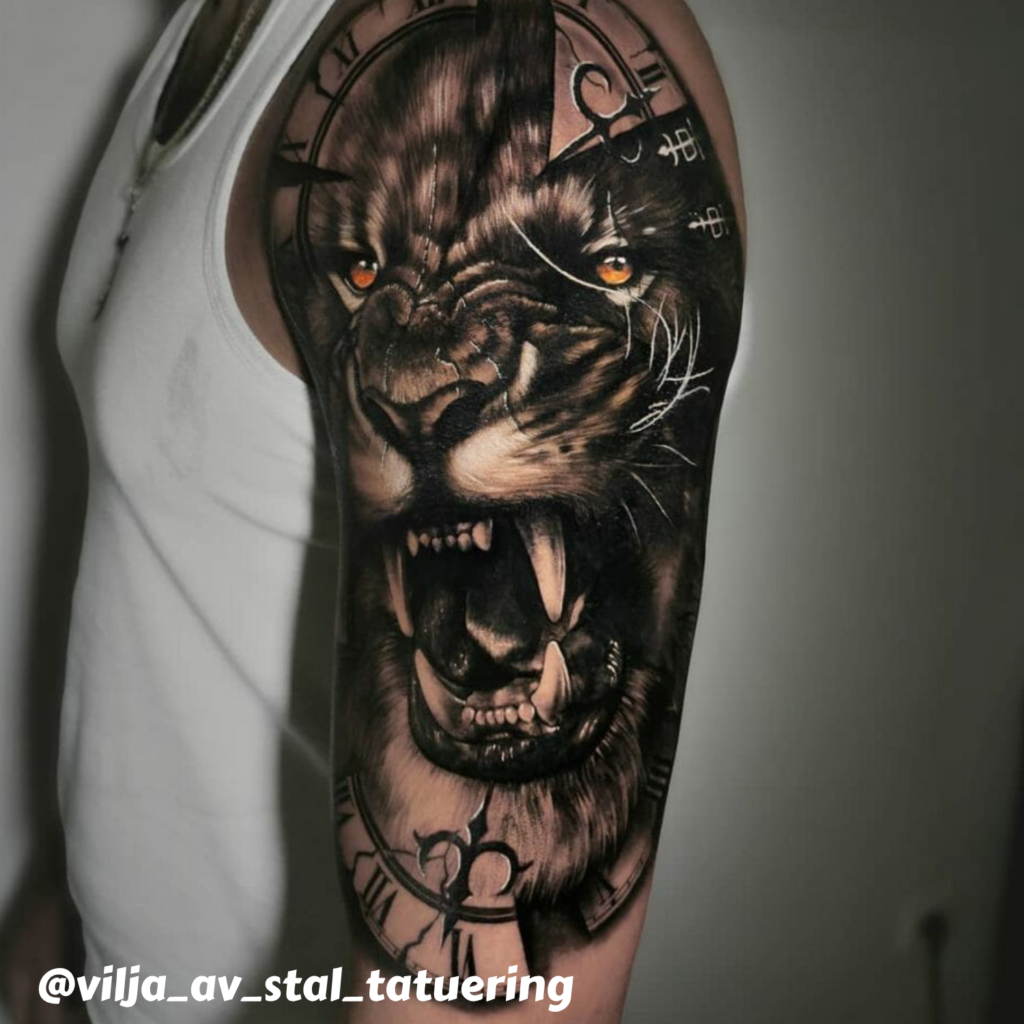
The Black & Grey style saw significant development in Los Angeles during the 1970s and 1980s, particularly within the Chicano tattoo scene. Tattoo artists from Latin American communities in Los Angeles, especially in East L.A., adopted and refined Black & Grey techniques, drawing inspiration from Chicano art and lowrider culture. These tattoos often featured motifs of Catholic iconography, Aztec symbolism, and imagery reflecting street culture. The single-needle technique created delicate, smooth gradients, which allowed for detailed portraits, realistic images, and expressive shading.
Esteemed artists like Freddy Negrete, Jack Rudy, and Mark Mahoney were pioneers in taking Black & Grey tattooing from the underground and prison scene into mainstream tattoo parlors. Working at places like the legendary Good Time Charlie’s Tattooland in East L.A., they refined the style further and introduced it to a broader audience. Negrete and Rudy were instrumental in formalizing the single-needle technique, allowing for exceptionally fine lines and highly realistic renderings, which became the hallmark of the Black & Grey aesthetic.
Rise to Mainstream Popularity
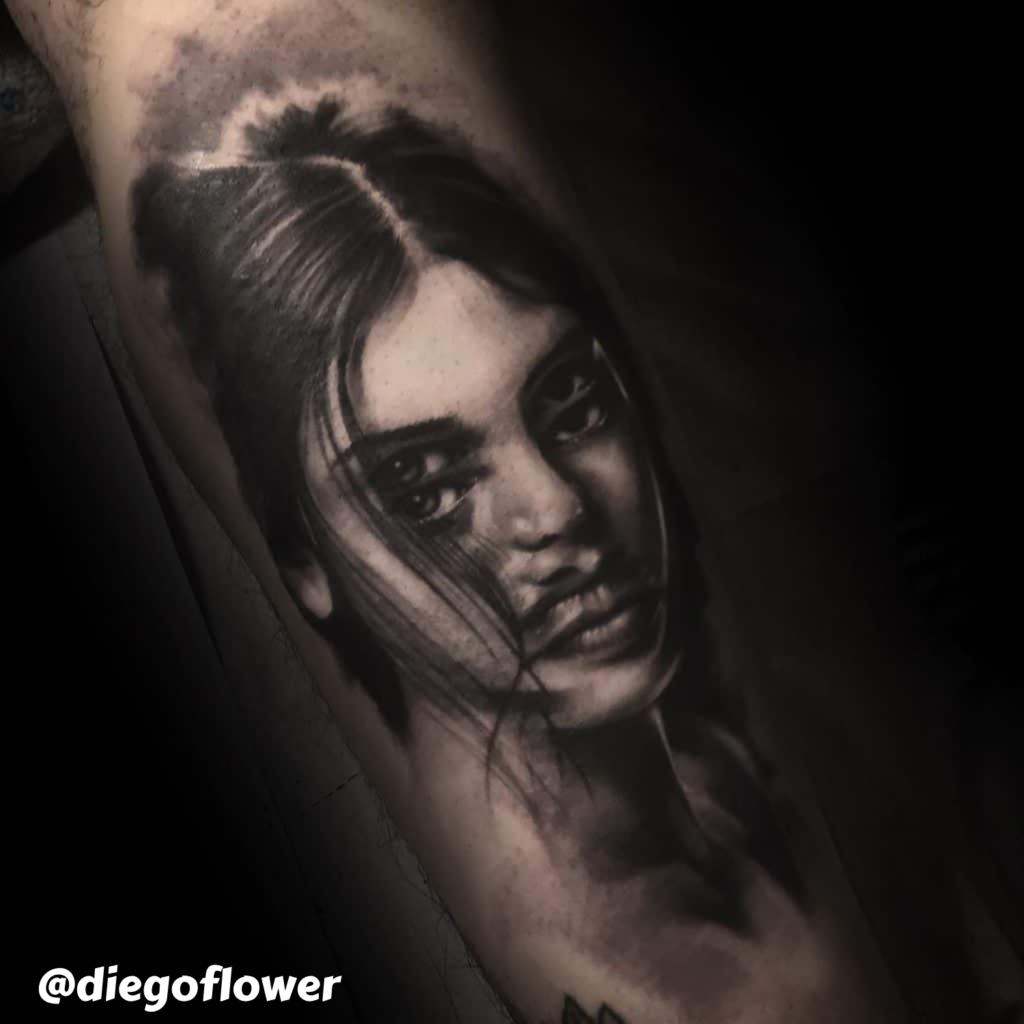
During the 1990s, the tattooing industry started to gain mainstream acceptance, and Black & Grey tattooing rode the wave of this cultural shift. Celebrities, musicians, and athletes began to showcase their Black & Grey tattoos, bringing increased visibility and respect to the style. The versatility of Black & Grey allowed it to transition well across different subcultures and appeal to a wide range of clients—from those seeking spiritual or religious themes to those wanting realistic portraits or custom designs.
The style’s focus on realism and fine detail also intersected well with the rise of photorealism in tattooing. Artists began exploring new techniques to push Black & Grey tattoos into hyperrealism, using refined shading to mimic photographs. The style’s versatility allowed for a range of artistic directions, from spiritual and surreal themes to macabre and nature-inspired imagery.
Contemporary Black & Grey Tattooing
Today, Black & Grey remains one of the most popular and respected styles globally. With advancements in tattoo machines, inks, and aftercare products, artists now have greater control and precision, enabling them to create exceptionally detailed pieces with stunning depth. The style has also become more diversified, evolving to include subgenres like hyperrealism, illustrative Black & Grey, surrealism, and horror themes.
Artists like Nikko Hurtado, Carlos Torres, and Paul Booth have made significant contributions to contemporary Black & Grey, pushing the boundaries of what the style can achieve in terms of shading, detail, and realism. In addition to single-needle techniques, modern artists use a variety of needle groupings and shading styles to create nuanced gradients and achieve striking depth and contrast.
Techniques and Aesthetic Principles
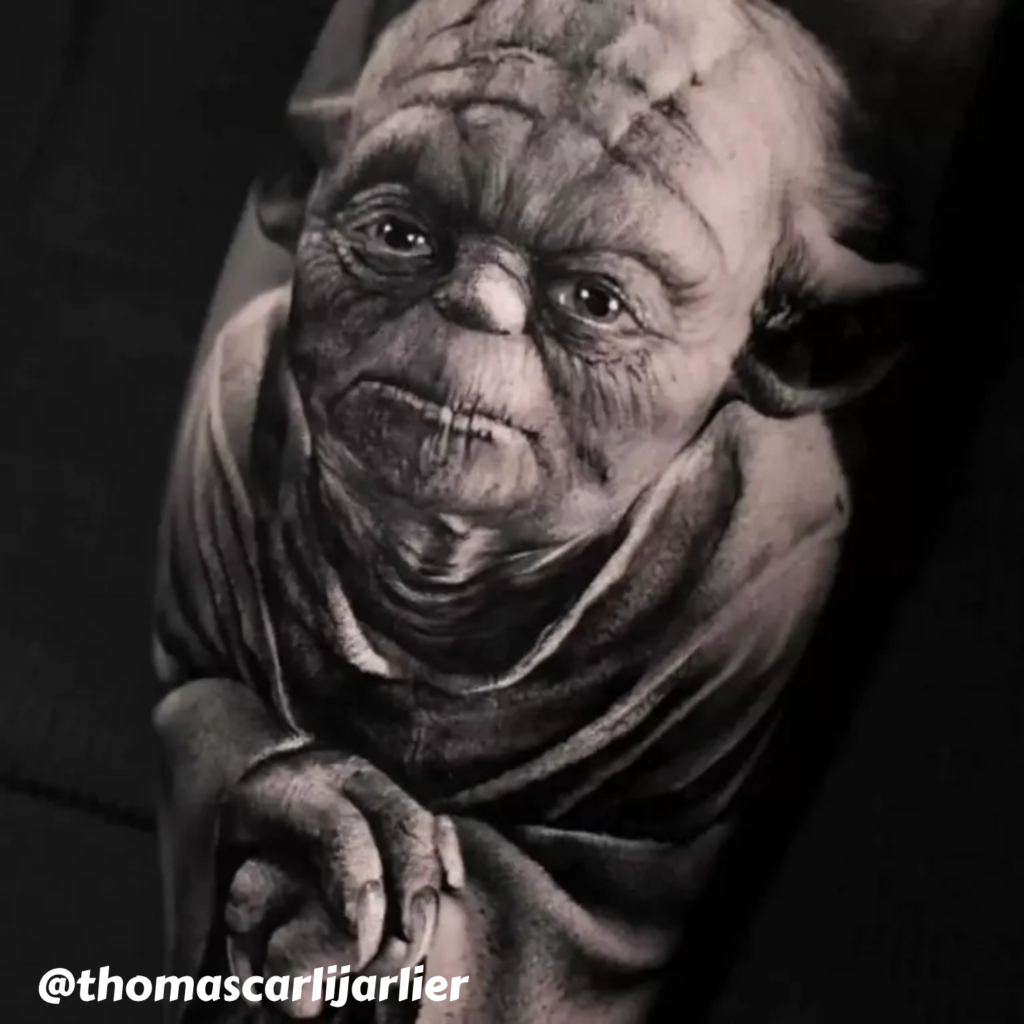
Black & Grey tattooing relies heavily on technical skill and an understanding of light and shadow. To achieve the various shades, artists dilute black ink with distilled water to create “washes” that range from light gray to deep black. This palette allows for the subtle gradations necessary for achieving realism and dimension.
Key techniques include:
Single-Needle Detail: Used for creating fine lines and intricate details, especially in portraits.
Smooth Shading: Gradual transitions between tones to create soft shading and realistic textures.
High Contrast: Deep blacks juxtaposed with soft grays to produce dramatic effects and emphasize certain elements.
Cultural Significance
Black & Grey tattooing remains deeply connected to its origins in Chicano and prison tattoo culture, symbolizing resilience, identity, and cultural pride. Chicano tattoo art, with its spiritual iconography and storytelling themes, has influenced generations of artists worldwide. Beyond this, Black & Grey also continues to represent dedication to craftsmanship and technical mastery in the tattoo world. The style’s adaptability and emotive power make it one of the most requested and admired tattoo styles, resonating across cultural boundaries.
Legacy and Continuing Evolution
Black & Grey tattooing has had a profound impact on the tattoo industry, inspiring new generations of artists and influencing other styles. It remains a staple of modern tattooing, valued not only for its aesthetic appeal but also for its historical and cultural depth. As the style continues to evolve, it maintains a strong link to its roots, honoring the traditions that shaped it while pushing the boundaries of what tattoo art can express.