Overview
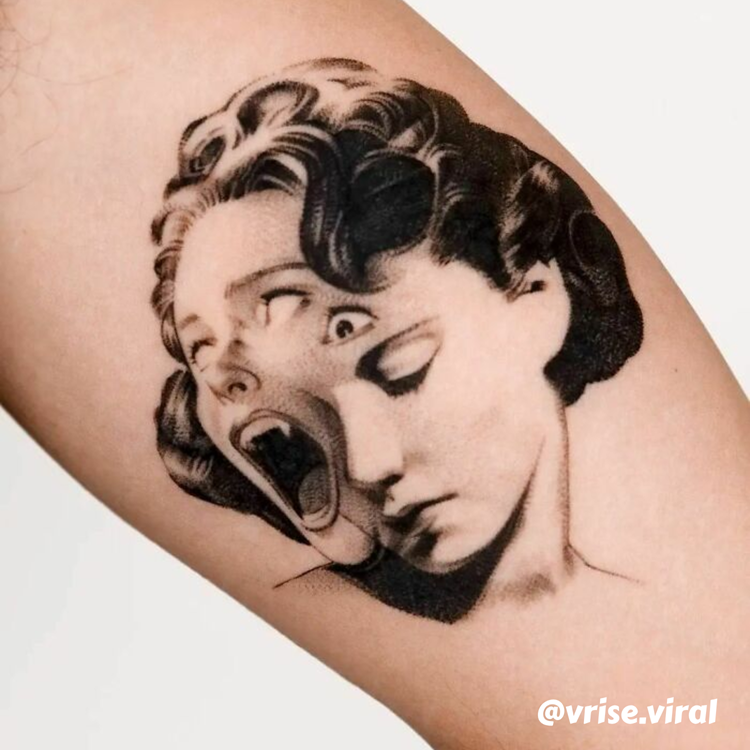
Illusion tattoos are a modern and visually striking style of body art that plays with perception, creating designs that deceive the eye, defy the laws of physics, or challenge spatial understanding. These tattoos often involve complex patterns, shapes, and visual tricks that make them appear three-dimensional, distorted, or even animated. As one of the more recent trends in tattoo artistry, illusion tattoos blend elements of geometry, shading, and fine line work to create mind-bending effects that make them stand out from traditional tattoo styles.
Origins and Influence
While the history of tattooing dates back thousands of years, illusion tattoos, as we know them today, are a relatively recent phenomenon. Their roots lie in the evolution of artistic techniques, particularly within the realms of visual art and graphic design. The development of 3D art and the rise of optical illusion techniques in the 20th century heavily influenced the advent of illusion tattoos in the 21st century.
In the early 2000s, tattoo artists began experimenting with optical illusions, using shading techniques and geometric patterns to create designs that had a “floating” or “popping” effect. These artists were influenced by various artistic movements, including surrealism, cubism, and contemporary graphic design, which embraced the exploration of perspective, depth, and form.

Key Influences:
- Op Art (Optical Art): Developed in the 1960s, Op Art focused on creating illusions of movement, vibration, and depth through precise arrangements of patterns, colors, and lines. Artists like Bridget Riley and Victor Vasarely were pioneers of this movement, which has influenced tattoo artists working in the illusion style.
- Surrealism: Known for its dreamlike, fantastical imagery, surrealism often involves distorted realities and altered perceptions of space. This influence is evident in illusion tattoos, which often feature objects or figures that appear to exist in a space they shouldn’t, or that morph from one shape to another.
- Geometric and Sacred Geometry: Geometric tattoos, particularly those based on sacred geometry, have been a significant precursor to illusion tattoos. The intricate patterns and precise linework of these tattoos allow for the creation of illusions of movement and transformation.
- 3D Art and Graphic Design: The development of 3D technology and digital art in the late 20th and early 21st centuries also impacted illusion tattoos. Digital artists began using software to create intricate designs that pushed the boundaries of visual perception. Tattoo artists, in turn, adapted these techniques to the human body.
Tattoo Techniques and Styles
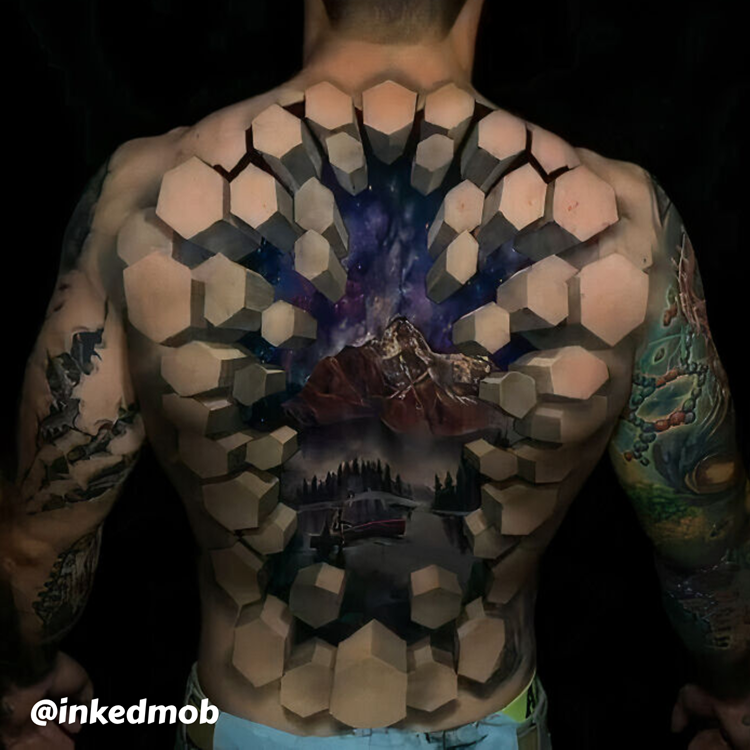
Illusion tattoos are known for their complexity and high level of technical skill. Some of the key techniques and styles used to create illusion tattoos include:
- Shading and Gradients: Mastery of shading is essential for illusion tattoos, as subtle variations in tone can create the illusion of depth and dimensionality. Artists often use gradients and light-to-dark shading techniques to simulate shadows and highlights that give tattoos a 3D appearance.
- Geometric Patterns: These tattoos often rely on perfectly symmetrical, precise geometric patterns, which can create the appearance of shapes “popping out” of the skin or merging into one another. Geometric designs may include shapes like cubes, spirals, hexagons, and more complex fractals.
- Negative Space: Illusion tattoos frequently incorporate negative space (the uninked area of the skin) as an integral part of the design. By leaving parts of the skin untouched, artists can create designs that appear to be incomplete, fragmented, or open to interpretation, enhancing the illusion.
- M.C. Escher Influence: The Dutch graphic artist M.C. Escher is famous for his mind-bending works that often feature impossible structures and optical illusions. His influence is clear in illusion tattoos that use architectural motifs, impossible stairs, and distorted shapes to challenge the viewer’s perception of reality.
- Trompe-l’œil: This technique, which means “deceive the eye” in French, is used to create hyper-realistic images that appear to be three-dimensional. In tattoos, this can include realistic objects that appear to be carved into the skin or floating above it, such as a skull, a pocket watch, or a 3D geometric shape.
Popular Illusion Tattoo Designs
The designs seen in illusion tattoos are diverse, but some of the most popular themes include:
- 3D Geometric Shapes: These tattoos often feature cubes, spheres, or intricate polygonal patterns that seem to pop off the skin.
- Optical Illusions: Tattoos that appear to shift or change when the viewer’s angle changes, such as twisting spirals or impossible shapes.
- Double-Exposure Designs: These tattoos use layered images that can be interpreted in multiple ways, often blending nature and mechanical objects or animals with surreal effects.
- Impossible Objects: Taking inspiration from Escher’s work, these tattoos often feature paradoxical or impossible structures like infinite staircases or objects that seem to defy physics.
Key Artists in Illusion Tattoos
Some tattoo artists are particularly known for their mastery of the illusion tattoo style. They have popularized the trend with their ability to push the limits of visual perception through body art. Notable artists include:
- Aloysius: Known for his 3D geometric tattoos, Aloysius has gained a reputation for creating designs that appear to move and change based on the viewer’s perspective.
- Inal Bersekov: A Russian tattoo artist, Inal Bersekov specializes in hyper-realistic and optical illusion tattoos that often include elements like distorted faces or objects that appear to emerge from the skin.
- Taki 183: While not a tattoo artist, Taki’s street art and optical illusions have influenced many tattoo artists who draw on elements of his work for their designs.
The Evolution of Illusion Tattoos
Illusion tattoos have evolved from being a niche art form to a mainstream trend. As tattoo technology has advanced, with better needle types and ink that allows for more detailed work, illusion tattoos have become increasingly intricate. The popularity of illusion tattoos has also been driven by social media platforms like Instagram, where visually stunning tattoos often gain viral attention. This has encouraged tattoo artists to continually refine and innovate in this style, resulting in ever more complex and sophisticated designs.
Conclusion
Illusion tattoos are a testament to the creativity and technical skill of modern tattoo artists. They represent a fusion of art, geometry, and visual deception, offering a visually stimulating experience for those who view them. Drawing on influences from optical art, surrealism, and geometric design, illusion tattoos have become a unique and exciting form of self-expression that challenges our perceptions of space, reality, and the human body. With the ongoing development of tattoo technology and techniques, the future of illusion tattoos holds endless possibilities for further artistic innovation.