Tattoo portraits are one of the most complex and revered forms of body art. This style involves realistic representations of people, typically close-up depictions of faces, capturing intricate details such as facial features, expressions, and emotions. The aim of portrait tattoos is often to immortalize a person, whether living or deceased, or to represent historical figures, celebrities, loved ones, or fictional characters. The evolution of portrait tattoos reflects both the development of tattooing techniques and the cultural significance of human likenesses.

Origins and Early History
Tattooing has existed for thousands of years across diverse cultures, and the art of portraiture predates written history. The earliest evidence of tattooing comes from the mummified remains of the Ötzi the Iceman, a man who lived around 5,300 years ago in the Alps. Though his tattoos were not portraits, they demonstrate that tattooing has ancient roots.
Portrait tattoos, however, were not common in the early days of tattooing. The art of creating a detailed portrait on the human skin began to develop more significantly in the 18th and 19th centuries, when Western societies began to popularize tattooing. As tattoos became more accepted in the West, they evolved from simple, symbolic images to more elaborate designs that included depictions of animals, religious symbols, and eventually human faces.
The Age of Sail and Traditional Tattooing
The rise of portrait tattoos in the Western world can be traced back to the Age of Sail in the 17th and 18th centuries. Sailors would often get tattoos as mementos of their travels or to honor lost comrades. These tattoos, though primarily traditional and often symbolic (anchors, roses, etc.), laid the foundation for more personal depictions, including portraits.
The first known tattoo artist to gain fame for producing realistic human portraits was Norman “Sailor Jerry” Collins, a key figure in the development of American traditional tattooing during the early 20th century. Collins focused on bold, clear lines and vibrant color, and his work was influenced by traditional Western tattooing techniques. However, the tattooed portraits in the early 20th century still lacked the level of realism and shading found in modern portrait tattoos.
Technological Advancements and the Rise of Realism
The development of tattooing machines in the late 19th century, particularly the invention of the electric tattoo machine by Samuel O’Reilly in 1891, revolutionized the art of tattooing. This allowed for finer lines and greater detail, making it possible to create more intricate and lifelike designs. Artists began experimenting with different shading techniques, which paved the way for portrait tattoos to become more realistic.
The real breakthrough for tattoo portraits came in the mid-20th century, with the rise of artists who could accurately reproduce the human face on skin. One of the most important figures in this development was George Burchett, often called the “King of Tattooists.” Burchett, who worked in the early to mid-20th century, became famous for his ability to tattoo lifelike portraits. He focused on fine line work, delicate shading, and using photographic references, setting the stage for portraiture as a highly specialized and respected aspect of tattoo art.
Another important figure in the development of portrait tattoos was Ed Hardy, a key proponent of the “New School” tattoo style in the 1980s. Hardy, who was influenced by both traditional and modern tattoo techniques, played a significant role in the acceptance and refinement of portrait tattoos in the contemporary tattoo scene. He introduced softer, more realistic shading, intricate details, and depth to tattoo portraits, blending realism with artistic expression.
Modern Portraiture in Tattoos
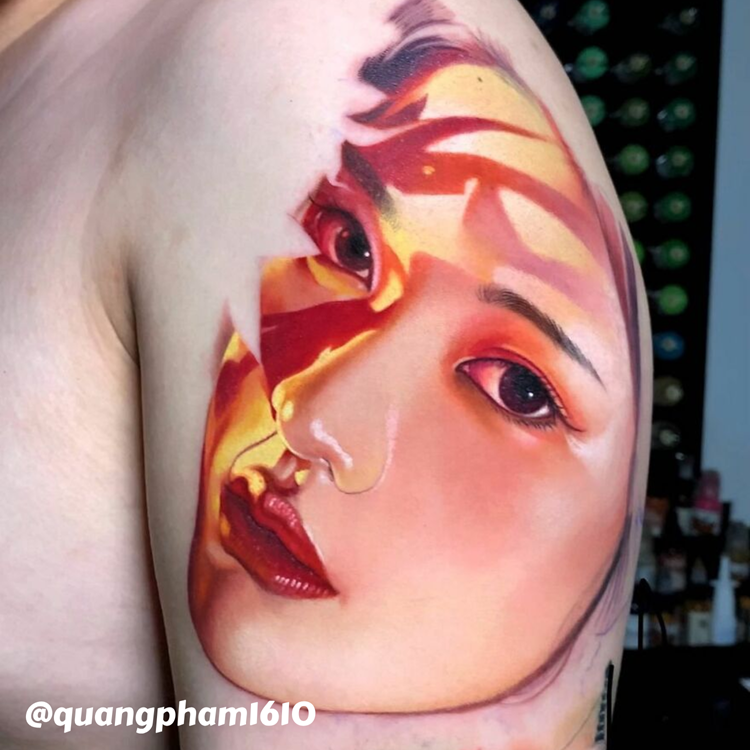
With the invention of more advanced tattoo machines and needles in the late 20th and early 21st centuries, portrait tattoos reached new heights of realism. Artists today have access to an array of tools that allow them to create hyper-realistic tattoos that mimic photographs. These machines can achieve incredibly fine details, and the availability of specialized inks allows for greater depth and color precision. Artists now use digital photos or even 3D imaging as references to achieve lifelike results.
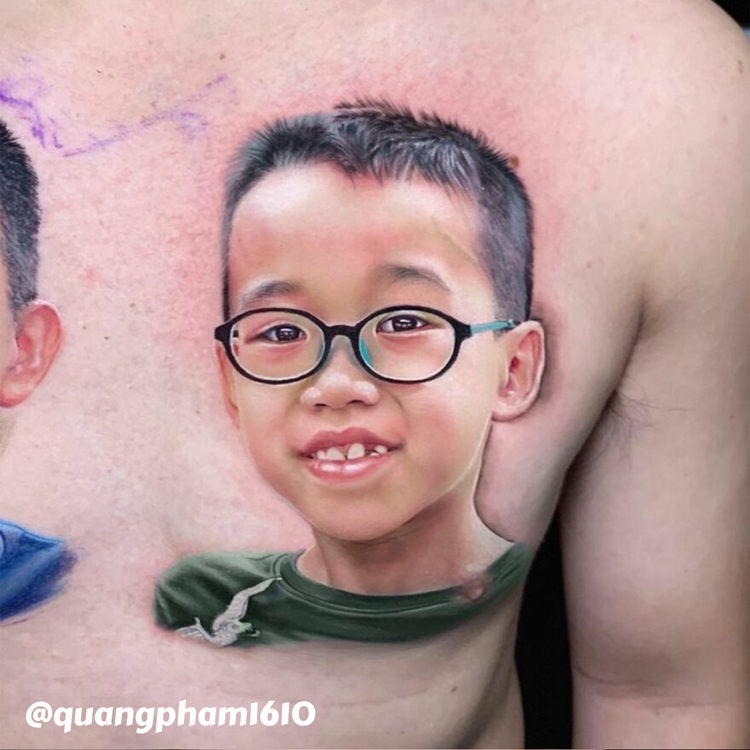
Contemporary tattoo artists often specialize in portrait tattoos and employ advanced techniques like shading, highlighting, and layering to achieve the desired effect. Photorealism in tattoos has become a sought-after skill, with artists pushing the limits of how realistic a portrait tattoo can be. While black-and-gray tattoos were dominant for many years, full-color portrait tattoos have grown increasingly popular, offering a broader palette for artists to work with.
Cultural Significance of Portrait Tattoos
Portrait tattoos often hold deep emotional value for those who get them. They can be used to commemorate a loved one, preserve the memory of a historical or cultural figure, or even celebrate an icon from popular culture. The practice of memorializing individuals through tattoos is deeply rooted in human culture; for example, in ancient Egypt, tattoos were used as marks of protection and connection to the divine, and in the Pacific Islands, tattoos were used to honor ancestors and protect the wearer from spirits.
In modern times, people often opt for portrait tattoos to remember lost loved ones, such as parents, grandparents, or children. This can also extend to memorializing pets or other important figures. The emotional and personal connection that a portrait tattoo represents makes it one of the most meaningful forms of tattoo art.
Additionally, portrait tattoos can have a cultural impact by preserving the likenesses of figures who have shaped history or represent certain movements, such as civil rights leaders, musicians, political figures, or fictional characters. As tattoos have become more mainstream, portraiture has allowed individuals to make powerful statements about their personal beliefs and identity.
Challenges of Portrait Tattoos
Creating a successful portrait tattoo is not without its challenges. Tattoo artists must have an intimate understanding of human anatomy and facial proportions. Achieving the level of detail required for photorealism demands precision, expertise in shading, and the ability to use light and shadow to create depth. A single mistake in the placement of facial features can lead to a distorted or unrecognizable portrait, which is why portrait tattoos are considered one of the most difficult types of tattoo art.
Artists also face challenges when working with different skin tones and textures, as these can affect how the tattoo heals and appears over time. Darker skin tones, for example, may present difficulties in achieving the same level of contrast and detail that lighter skin allows, meaning that some adaptations need to be made to ensure the portrait looks as realistic as possible.
Portrait Tattoos Today
Today, portrait tattoos are more popular than ever. With tattoo conventions and social media platforms like Instagram allowing artists to showcase their work, portraiture has become an important aspect of the tattoo industry. Some artists specialize solely in portrait tattoos, often gaining recognition for their ability to replicate famous faces or capture the likeness of loved ones. Artists such as Nikko Hurtado, Chaim Machlev, and Kirk Nilsen have become renowned for their work in the portrait tattoo genre.
In addition, portrait tattoos continue to evolve. Some modern tattoo artists blend realism with surrealism, abstract art, or traditional tattoo elements, creating innovative and unique interpretations of the human face.
Conclusion
Tattoo portraits have evolved from a simple homage to sailors’ comrades or tribal markers to a complex art form that celebrates the human form. Through centuries of experimentation and technological innovation, the portrait tattoo has become one of the most sophisticated styles in the tattoo world. Today, portrait tattoos continue to carry deep personal meaning for many, while also standing as a testament to the technical skill and creativity of tattoo artists. Whether rendered in black and gray or vibrant color, portrait tattoos are a lasting, powerful way to capture human likeness on the canvas of the skin.