Samoan tattooing, known as tatau (pronounced tah-tau), is one of the oldest and most deeply rooted tattoo traditions in the world. The practice is closely tied to Samoan culture, customs, and social structure. For centuries, tattoos have been used to signify a person’s social rank, rites of passage, and adherence to ancestral traditions. The Samoan tattoo tradition is part of a broader Pacific Oceanic tattooing heritage, with variations across different islands and regions, but it remains particularly strong in Samoa.
Early Origins and Mythology
The word tatau itself is believed to come from the Samoan language, where it directly refers to the act of tattooing. The practice has been carried out for thousands of years, with its origins steeped in Polynesian mythology. According to legend, the art of tattooing was gifted to the Samoans by the gods, specifically the god Tagaloa. It is said that the first tattoo artists were divine beings, often depicted as being capable of using supernatural powers to create tattoos that were both symbolic and protective.
The Samoan tattoo tradition is believed to have been practiced since at least the 2nd century BCE, as archaeological evidence suggests that tattoos were common among Pacific Island societies long before Western contact. Samoan tattoos, in particular, were traditionally performed using tools made from natural materials, such as shark teeth and bone needles, which were meticulously crafted by specialized tattoo artists called tufuga ta tatau.
Social and Cultural Significance

In Samoan society, tattoos were much more than just body art. They were seen as markers of a person’s identity, social status, and familial ties. The process of receiving a tattoo, especially for males, was a sacred ritual that marked important stages in life, such as the transition from boyhood to manhood. The act of getting a tattoo was considered a rite of passage that conveyed not only personal growth but also a connection to the larger family and community.
There are two primary types of tattoos in Samoan culture:
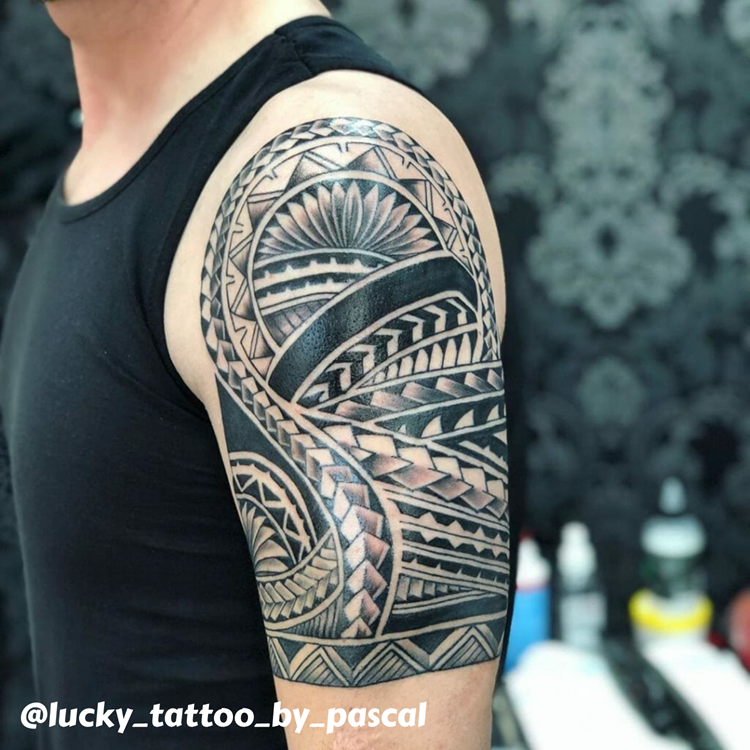
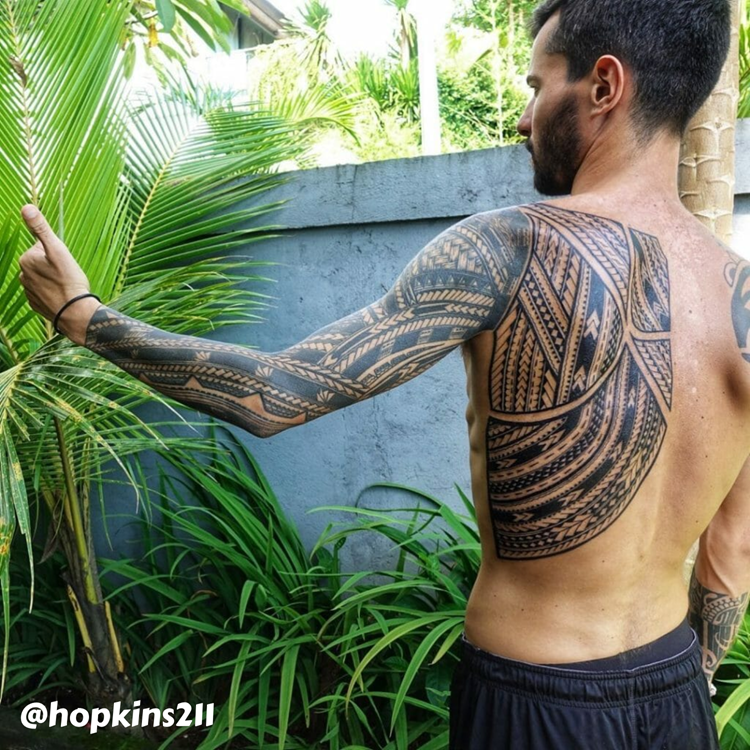
- The Pe’a (for men): This is the full-body tattoo that typically covers the body from the waist to the knees. It is a significant mark of a man’s adulthood, bravery, and readiness to assume his responsibilities within society. The Pe’a is known for its elaborate geometric designs and intricate patterns, which can take many hours or even weeks to complete, depending on the size and complexity of the tattoo.
- The Malu (for women): The Malu is a tattoo that traditionally covers the lower part of the body, from the thighs to the knees. This tattoo represents a woman’s coming-of-age, her beauty, and her role within the family structure. While traditionally it was less elaborate than the Pe’a, it remains a symbol of honor, respect, and social responsibility.
Both tattoos are rich in symbolism, with each design element holding specific meanings related to the Samoan worldview. For instance, the patterns may represent aspects of nature, ancestry, or Samoan virtues, such as strength, resilience, and wisdom. Common symbols found in both types of tattoos include waves (representing the ocean), turtles (symbolizing endurance), and geometric motifs (reflecting the interconnectedness of life).
The Tattooing Process
Tattooing in Samoa is a painstakingly slow process that requires great skill and patience. Traditionally, tattoos were applied using a tapping technique, where the tattoo artist would tap a needle into the skin using a mallet. The needles were often made from bone or coral, while the ink was derived from natural materials, including soot mixed with coconut oil. This process was both physically painful and spiritually significant, and the experience was often described as a form of initiation or communion with the divine.
The tufuga ta tatau, or tattoo master, was highly respected in Samoan society, and the act of tattooing was considered sacred. These artists often learned their craft through apprenticeships, passing down techniques and designs through generations. As a result, tattooing was not only an art form but also a way of preserving and transmitting cultural knowledge.
Colonization and Decline
The arrival of European missionaries and explorers in the 18th and 19th centuries led to significant changes in Samoan society, including the suppression of traditional practices like tattooing. Missionaries, particularly those from Christian denominations, viewed tattoos as pagan or barbaric, and they sought to discourage the practice among the native population. Many Samoans were baptized and converted, and the art of tattooing was almost entirely abandoned during this period.
In addition, the introduction of Western ideals about modesty, personal appearance, and cultural norms created a stigma around tattoos, especially for women. As a result, Samoan tattooing went into decline, and fewer individuals received tattoos.
Revival and Contemporary Practice
In the mid-20th century, however, there was a resurgence of interest in Samoan tattooing, both within Samoa and among the Samoan diaspora. This revival was partly driven by a desire to reclaim cultural identity in the face of Westernization and globalization. Samoan tattooing began to be seen as a vital part of the broader movement of indigenous cultural preservation, with a renewed focus on the spiritual and historical significance of tattoos.
Today, Samoan tattoos are widely celebrated not just in Samoa but also in other Pacific Island communities. Many Samoans, particularly those living outside their homeland, are reconnecting with their ancestral roots through the practice of tattooing. The tattoos have come to symbolize pride in their heritage, unity with their ancestors, and the strength of the Samoan people. In addition to traditional designs, contemporary tattoo artists often blend traditional Samoan motifs with modern styles, creating new interpretations of the ancient art form.
Notably, the Samoan tattoo tradition has gained international recognition, with non-Samoans also seeking tattoos inspired by the Samoan style. This has raised debates about cultural appropriation and the ethical considerations surrounding the use of traditional tattoo designs by people outside of the Samoan culture.
Conclusion
Samoan tattooing is a rich, ancient tradition that holds profound cultural, spiritual, and social significance for the Samoan people. From its early roots in mythology to its near-erasure during colonial times, and its modern-day revival, the practice of tattooing has endured as a powerful symbol of identity, heritage, and community. Today, tatau is a living tradition that continues to inspire people worldwide, reflecting the resilience and cultural pride of the Samoan people.