Bio-organic tattooing is a style that blends elements of nature and abstract organic forms to create tattoos that feel alive and rooted in natural, biological structures. Emerging from the broader “biomechanical” tattoo movement of the late 20th century, bio-organic tattoos retain a similar emphasis on flowing lines, intricate textures, and 3D effects but diverge by focusing on organic, living shapes instead of mechanical or cybernetic ones. Here’s a look into its background, history, and what makes it distinctive.

- Origins of the Bio-Organic Tattoo Style
The bio-organic style is a subgenre of the biomechanical style, which originated in the late 1970s and 1980s. Biomechanical tattoos were inspired by the fusion of biology and machinery, blending human or animal anatomy with mechanical parts. Influences came largely from the sci-fi artwork of H.R. Giger, who famously created the alien designs for the movie Alien (1979), along with other sci-fi and horror films that showcased surreal and intricate blends of machinery and organic forms.
As tattooing advanced, artists began to experiment with the concepts of biomechanical tattoos but shifted their focus toward more “natural” elements. They started to replace gears, pipes, and metallic textures with features inspired by natural structures, like bones, muscles, coral, fungi, and plant-like forms. This organic direction gave birth to the bio-organic tattoo style.
- Evolution and Growth in Popularity
The bio-organic style gained traction in the 1990s and 2000s as tattooing techniques improved. The development of more advanced tattoo machines, pigments, and needles allowed artists to create the smooth shading, realistic textures, and gradients required to produce lifelike, complex designs. With these advancements, artists could push the limits of realism and create intricate tattoos that appeared to be extensions of the wearer’s body.
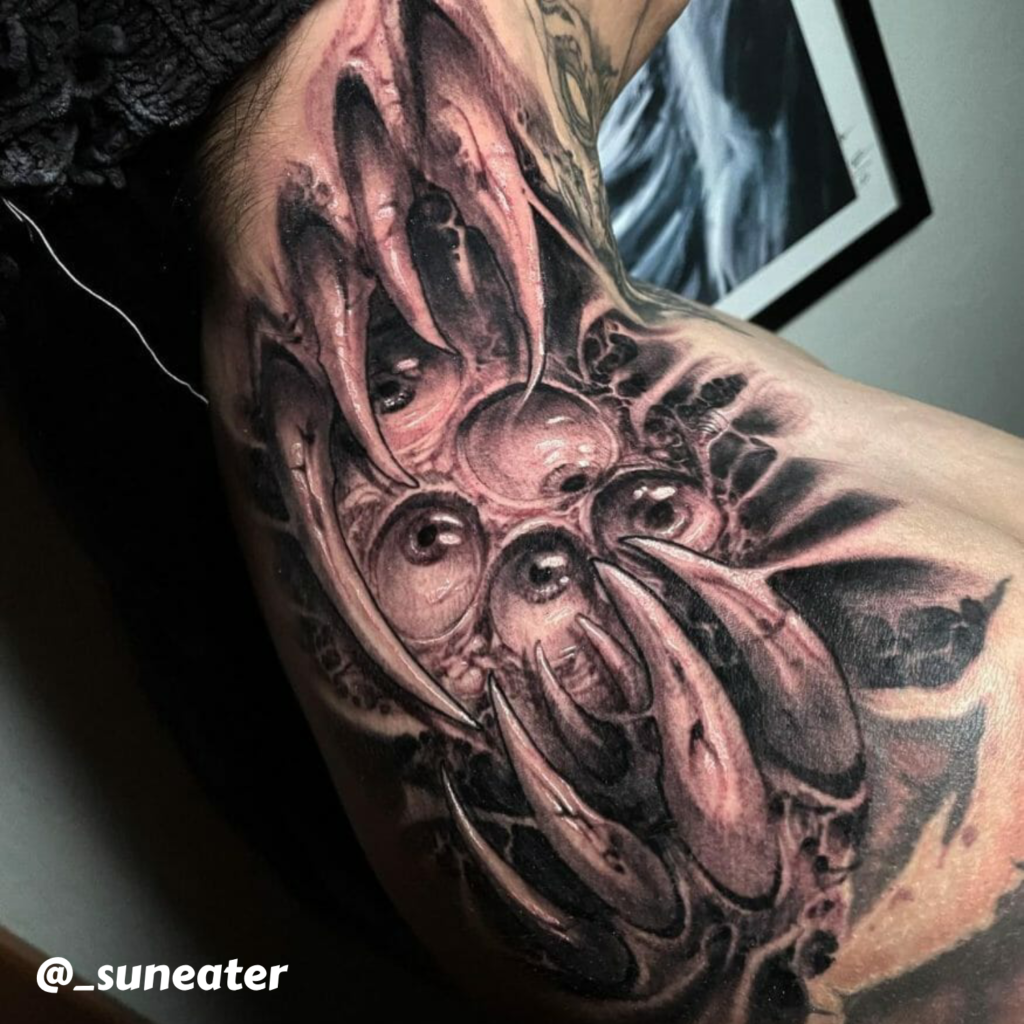
During this period, several prominent tattoo artists began to specialize in the style, helping to popularize and refine bio-organic tattooing. These artists drew inspiration from both the human form and nature’s diversity—mimicking cellular structures, bones, muscles, plant matter, and other naturally occurring shapes. The early pioneers of bio-organic tattooing were instrumental in creating the genre’s hallmark features: dynamic shapes, organic flow, and three-dimensional realism.
- Characteristics of Bio-Organic Tattoos
Bio-organic tattoos are distinguished by the following key elements:
Organic Flow: Unlike rigid biomechanical designs, bio-organic tattoos follow natural contours of the body and avoid straight lines. They “flow” in a way that feels alive, with rounded, soft shapes that mimic the movement and shapes found in nature.
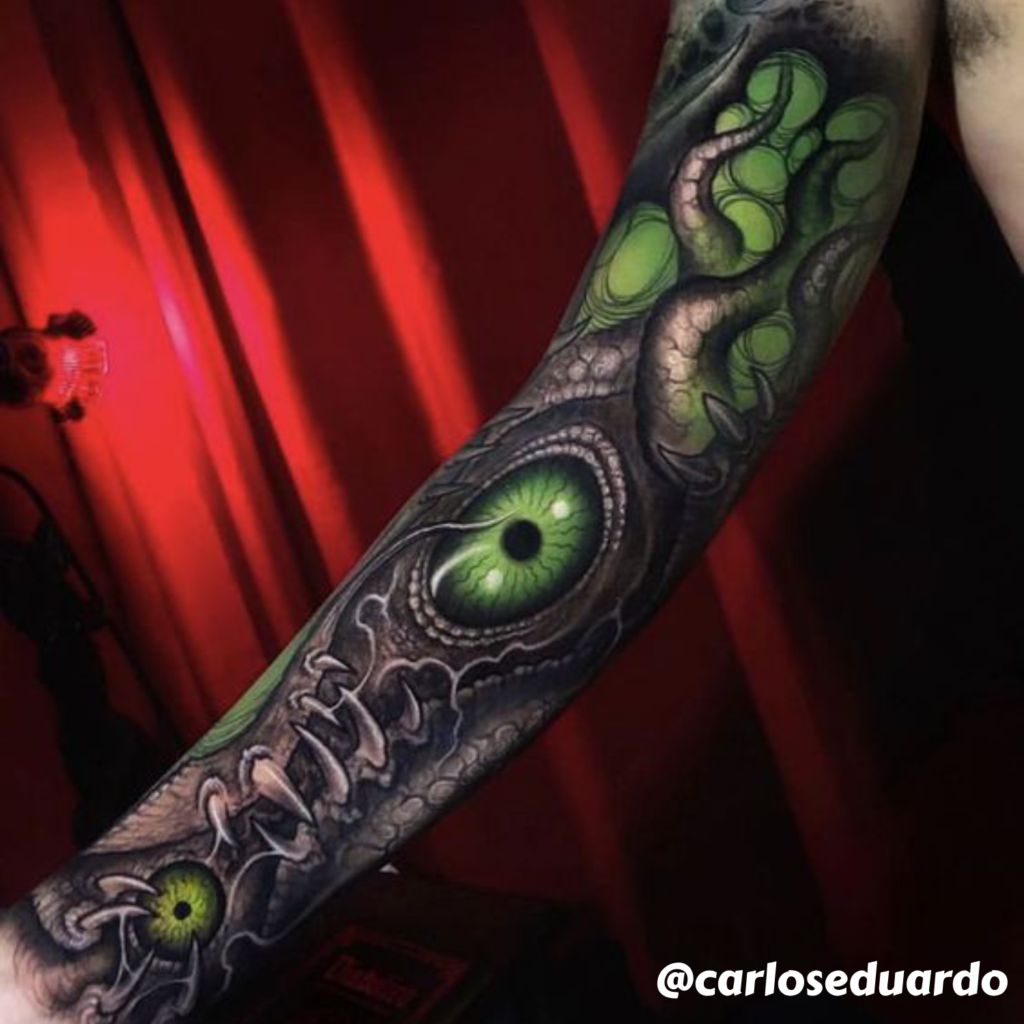
Natural Textures: The texture of a bio-organic tattoo often resembles organic materials such as skin, bone, bark, coral, fungi, or even alien skin. Artists create these textures with detailed shading and linework to make the tattoo appear as a part of the wearer’s body.
3D Effects: Bio-organic tattoos often use shading and highlights to create a three-dimensional, almost sculpted look. This effect helps the tattoo blend seamlessly into the body, giving the illusion that it’s part of the skin itself.
Abstract and Surreal Elements: Unlike realistic nature tattoos, bio-organic tattoos often take an abstract approach, incorporating surreal shapes, patterns, and colors that don’t exactly mimic anything in the natural world but evoke a biological feeling. These tattoos often look like they’re living or moving, giving an almost otherworldly appearance.- Influential Artists and Cultural Impact
Artists like Guy Aitchison, Aaron Cain, and Nikko Hurtado are credited with refining and expanding the bio-organic tattoo style, bringing it to a broader audience. Guy Aitchison, in particular, is renowned for his contributions to both the biomechanical and bio-organic styles, with his work often blending surreal, alien-like organic forms. Aitchison’s book Organica, published in the early 2000s, served as both inspiration and guidance for artists interested in exploring organic and surreal tattoo work.
Bio-organic tattoos also became popular in tattoo conventions and art magazines, and social media allowed the style to gain a global following. The advent of Instagram and other visual platforms helped bio-organic tattoo artists reach a wider audience, inspiring new artists and attracting clients who appreciated the surreal, almost science-fiction quality of these tattoos.
- Techniques and Tattooing Process
Creating bio-organic tattoos requires a high level of skill, particularly in shading, depth, and texture. Artists often use specialized techniques to create smooth transitions between light and shadow, essential for achieving a lifelike, three-dimensional effect. The following techniques are common in bio-organic tattooing:
Blending and Layering Colors: Artists use color blending and layering to create a sense of depth and realism. Colors are often earthy or muted, though vibrant, alien-inspired colors are sometimes used for a more surreal effect.
Smooth Gradient Shading: To mimic the smooth surfaces of natural forms, bio-organic tattoos rely heavily on gradient shading. This technique is essential for making the tattoo look embedded in the skin.
Contrasting Highlights and Shadows: Deep contrasts between dark shadows and light highlights give bio-organic tattoos their 3D appearance, adding to the illusion that the tattoo is an extension of the skin.- Bio-Organic Tattoos in Modern Tattoo Culture
Today, bio-organic tattoos are celebrated for their imaginative and innovative qualities. They’ve become a popular choice for clients who appreciate abstract art and seek a tattoo style that flows with their body’s natural shape. They’re especially favored among tattoo enthusiasts looking for large, cohesive body pieces that provide both artistry and individuality.
The bio-organic style continues to evolve, with artists incorporating new inspirations from the natural world and applying fresh techniques. The style has also influenced other art forms, from digital art to sculpture, as artists draw on the flowing, organic forms typical of bio-organic tattoos.
- Conclusion
Bio-organic tattooing has carved a unique niche within the tattoo industry, blending art, science, and nature in ways that feel both familiar and alien. The style’s growth reflects a broader trend in tattooing toward hyperrealism, abstraction, and the blending of artistic traditions. In a bio-organic tattoo, skin becomes canvas for nature-inspired designs that, while not always recognizable, resonate with a deep, biological essence, making each piece a unique, living artwork.