The “Cartoon” tattoo style is a vibrant and dynamic genre of body art that draws inspiration from animated characters, comic books, and the exaggerated, whimsical qualities of cartoons. It is a subcategory of illustrative tattooing, characterized by bold outlines, exaggerated proportions, bright colors, and playful imagery. The style has evolved to include a wide range of influences, from vintage comic strips to modern animated series, and has garnered a loyal following among tattoo enthusiasts and pop culture fans alike.

Origins of Cartoon Tattoos
The roots of cartoon tattoos can be traced back to the early 20th century, paralleling the rise of animation and comic books as cultural phenomena. As tattooing grew in popularity in Western culture, artists began incorporating familiar characters from comics and animation into their designs. The fascination with cartoon imagery provided a natural extension of tattoo art’s ability to express personality, humor, and nostalgia.
Early Influences
- Golden Age of Animation (1920s-1940s): The era of Walt Disney, Warner Bros., and Fleischer Studios brought iconic characters like Mickey Mouse, Betty Boop, and Bugs Bunny into the public consciousness. These characters often made their way into tattoos, especially among sailors and soldiers who wanted lighthearted reminders of home.
- Comic Strips and Books: Characters from comic strips like Popeye or superhero comics like Superman and Batman were also popular choices, reflecting the broader influence of mass media.
Mid-20th Century: Pop Art and Tattooing
In the 1960s and 1970s, pop art movements led by figures like Roy Lichtenstein and Andy Warhol elevated cartoon-like imagery into the realm of fine art. This period saw a growing appreciation for the aesthetic value of bold outlines and flat, vivid colors, further solidifying cartoons as a legitimate subject for tattooing. Tattoo artists started to blend traditional tattoo techniques with pop art elements, paving the way for cartoon-style tattoos to become more intricate and varied.
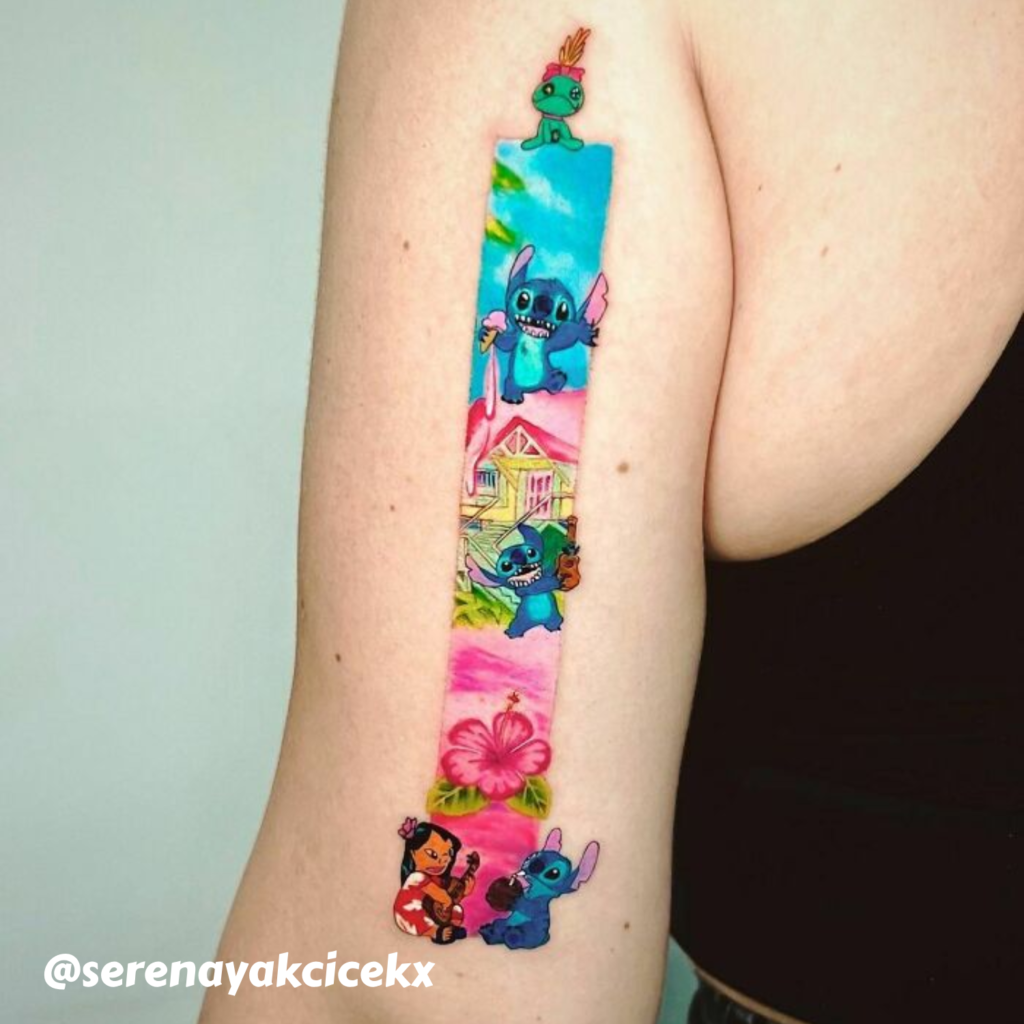
Evolution and Defining Characteristics
As tattoo technology and artistic skill advanced, so did the sophistication of cartoon-style tattoos. While early designs were often simple due to technical limitations, modern cartoon tattoos showcase incredible detail, shading, and creative reinterpretations.
Key Characteristics:
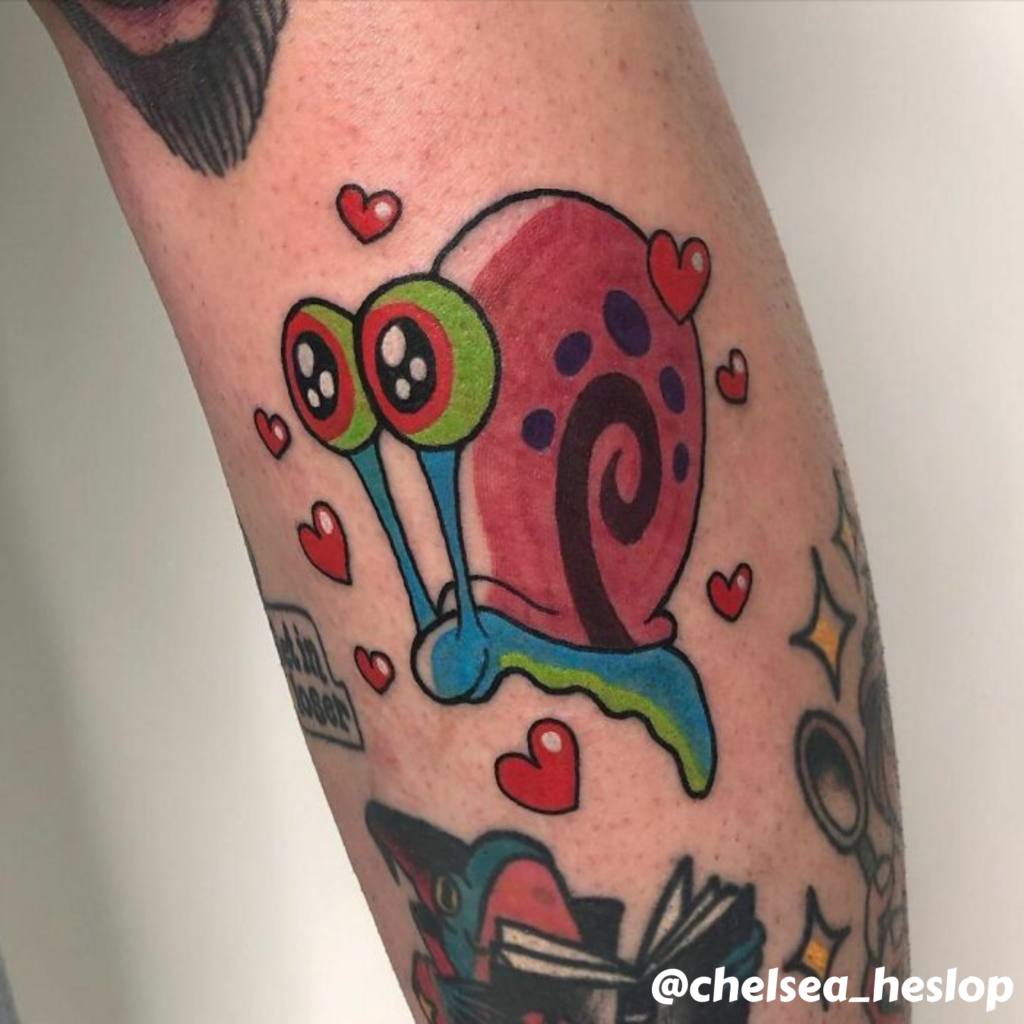
- Bold Lines: Inspired by comic and animation outlines, cartoon tattoos rely heavily on thick, clean lines for definition and emphasis.
- Bright Colors: Vibrant palettes are central to the style, often mimicking the high-saturation hues seen in animated media.
- Exaggeration: Proportions are often distorted for comedic or dramatic effect, such as oversized heads, expressive faces, or exaggerated gestures.
- Whimsy and Humor: These tattoos often convey humor, playfulness, or nostalgia, reflecting the carefree nature of cartoons.
- Adaptability: Artists frequently reinterpret classic characters, blending their personal style with the original designs or combining cartoon aesthetics with other tattoo genres, such as neo-traditional or realism.
Contemporary Trends
Modern cartoon tattoos have expanded far beyond replicating existing animated characters. Contemporary tattoo artists push the boundaries by incorporating:
- Custom Characters: Many clients request original cartoon-style characters, blending personal stories with the exaggerated, whimsical aesthetic.
- Crossovers: Combining cartoon styles with other genres, such as horror, surrealism, or even biomechanical tattoos, to create unique and innovative designs.
- Homages to Pop Culture: The resurgence of retro cartoons and anime has led to a spike in tattoos inspired by 1980s and 1990s nostalgia, including shows like The Simpsons, Looney Tunes, and Dragon Ball Z.
Famous Artists and Influence
Several tattoo artists have gained recognition for their mastery of the cartoon tattoo style:
- Tim Hendricks: Known for blending traditional tattoo techniques with cartoon-inspired imagery.
- Jesse Smith: Renowned for his surreal and whimsical cartoon tattoos that often include fantastical creatures.
- Kelly Doty: Celebrated for her unique take on pop culture characters and her fusion of spooky and cartoonish styles.
Cultural Impact
Cartoon tattoos are more than just decorative; they serve as a powerful form of self-expression, nostalgia, and fandom. Whether paying homage to beloved childhood characters or showcasing original creations, these tattoos embody the universal appeal of animated art. They also reflect the broader cultural trend of blending “low art” forms like cartoons with the traditionally “high art” medium of tattooing, demonstrating how tattoos continue to evolve as both a personal and cultural art form.
As animation and comics remain central to pop culture, the cartoon tattoo style is likely to remain a vibrant and evolving genre for years to come.