Surrealism
Surrealism has had a significant influence on various art forms, including the tattoo industry. Here’s a brief background and history of Surrealism in relation to tattoo art:

Background of Surrealism: Surrealism emerged as an artistic movement in the early 20th century, primarily in Europe, as a response to the aftermath of World War I and the burgeoning psychological theories of Sigmund Freud. Led by figures like André Breton, Salvador Dalí, and Max Ernst, Surrealism sought to unlock the creative potential of the unconscious mind. The movement aimed to challenge conventional artistic techniques and societal norms, emphasizing the power of dreams, the subconscious, and irrationality.
Influence on Tattoo Art: Surrealist imagery, characterized by its dreamlike, bizarre, and often symbolic elements, has become a popular theme in tattoo art. Tattoo artists draw inspiration from Surrealism’s unconventional approach to reality, incorporating elements such as distorted figures, fantastical creatures, symbolic motifs, and juxtapositions of unrelated objects.
History within the Tattoo Industry: While tattooing itself has a rich and ancient history, the incorporation of Surrealist motifs into tattoo art gained prominence in the latter half of the 20th century and continues to be relevant in the contemporary tattoo industry. Tattoo artists have drawn inspiration from Surrealist painters like Salvador Dalí, René Magritte, and Max Ernst, adapting their iconic works into unique tattoo designs.
Key Characteristics in Surrealist Tattoo Art:
- Dreamlike Imagery: Surrealist tattoos often feature dream-inspired scenes or elements, blurring the lines between reality and fantasy.
- Symbolism: Many Surrealist tattoos incorporate symbolic imagery that carries personal or universal meanings, often drawn from the subconscious.
- Distorted Figures: Surrealist art frequently distorts or exaggerates the human form, creating visually striking and thought-provoking compositions.
- Unexpected Juxtapositions: Surrealist tattoos may combine seemingly unrelated objects or concepts, inviting viewers to interpret their meaning in a subjective manner.
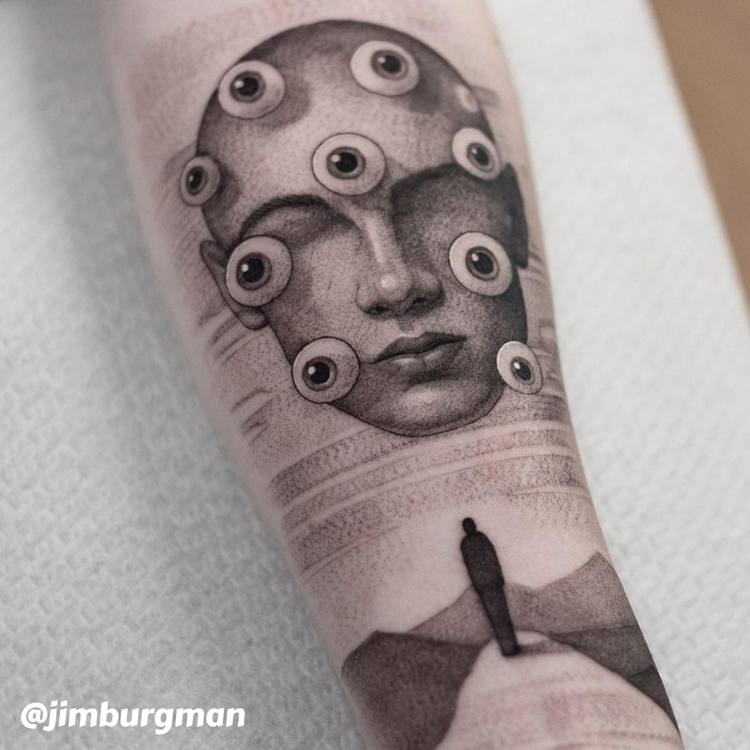
Contemporary Surrealist Tattoo Artists: Numerous tattoo artists specialize in Surrealist tattoo art, each bringing their unique style and interpretation to the genre. These artists often blend Surrealist motifs with other tattooing techniques, such as realism or neo-traditionalism, to create visually stunning and conceptually rich designs.
In summary, Surrealism’s influence on the tattoo industry is significant, with its emphasis on the subconscious, symbolism, and unconventional imagery providing fertile ground for creative expression within tattoo art.