White ink tattoos are a distinctive form of tattoo artistry where the tattoo is primarily created using white ink instead of the typical black or colorful inks. These tattoos are unique due to their subtler appearance, often blending into the skin tone rather than standing out, which gives them an ethereal, almost hidden look. While white ink tattoos have gained popularity in the modern tattoo scene, their history and usage span back centuries.

Origins and Evolution
- Ancient and Traditional Tattoos:
While the use of white ink is largely a modern innovation in tattooing, some historical forms of tattoos did incorporate lighter colors for decorative purposes. Ancient cultures, such as the Polynesians and Indigenous people of the Americas, used various pigments derived from natural sources. These pigments were primarily black, red, or brown, but the concept of using lighter shades existed, especially in ceremonial body art and healing tattoos. - Early Use of White Ink:
The intentional use of white ink in tattoos, as we recognize today, began to surface more in the 20th century. White ink was not traditionally a common choice for tattoo artists because most tattoos were done using black ink, which was easier to work with and more prominent on the skin. In the early days of tattooing, white ink was often used sparingly—either for highlighting purposes or for very specific details within a tattoo design, such as adding contrast or creating lighter shades. - Modern Popularity (Late 20th Century to Present):
White ink tattoos started to gain real momentum in the 1990s and 2000s, particularly in Western tattoo culture. The appeal of white ink tattoos grew as people sought more subtle, unique designs that would not stand out as boldly as traditional black or colored tattoos. Instead, they offered a more delicate and mysterious aesthetic that could be ideal for certain types of art, such as fine line work, geometric patterns, and minimalist designs. Artists began experimenting with the opacity and application techniques of white ink, pushing its boundaries beyond highlighting and accents. White ink became especially popular for tattoos that were meant to be barely visible, such as hidden tattoos on the ribs or inner arms, or for tattoos on individuals with lighter skin tones.
Characteristics of White Ink Tattoos
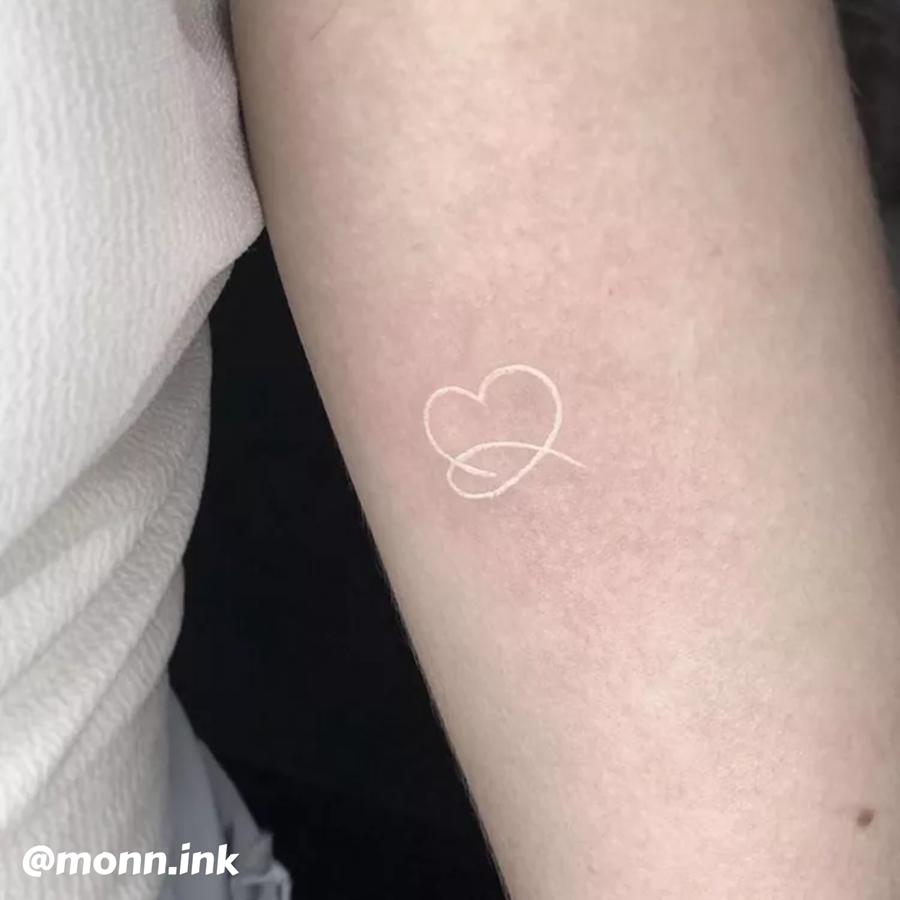
White ink tattoos are often more subtle and subtlety is their primary appeal. The designs can appear very faint or almost invisible on the skin, especially immediately after the tattoo is applied. However, over time, the ink tends to settle, and the tattoo becomes more visible.
Some of the key features of white ink tattoos include:
- Subtlety: They are less prominent than traditional tattoos, making them appealing for people who want something more private or personal.
- Effect in Different Skin Tones: White ink tattoos tend to show up better on lighter skin tones but can be difficult to see on darker skin, especially over time as the ink may fade or blend in with the skin tone.
- Aesthetic Appeal: White ink tattoos have a delicate, soft, and sometimes glowing effect. The white ink creates a unique contrast with the skin, giving the tattoo an almost mystical or ethereal quality.
- Design Flexibility: White ink can be used for intricate, detailed, and geometric designs, often appearing more like a scar or a subtle engraving than a traditional tattoo.
Challenges of White Ink Tattoos
- Visibility and Fading: One of the major challenges with white ink tattoos is their tendency to fade quickly, especially on darker skin tones. White ink is less stable than traditional tattoo inks and may turn yellow or dull over time, leading to a tattoo that is harder to see.
- Healing Process: White ink tattoos often take longer to heal compared to traditional tattoos, requiring more care and attention. The skin might react differently to the ink, and healing can sometimes result in irritation or an uneven appearance.
- Tattooing Technique: Because of the opacity of white ink, it requires more precision and expertise to apply. Artists need to work more carefully to avoid patches or unevenness in the design.
- Risk of Allergies: Some people may have allergic reactions to white ink, especially to titanium dioxide, which is commonly used as the pigment base in white ink tattoos. This can lead to swelling, irritation, or longer-term issues.
Notable Trends and Styles in White Ink Tattoos
- Invisible Tattoos: One of the most popular trends within white ink tattoos is the “invisible” tattoo. These tattoos are designed to be very faint, often showing up only in certain lighting conditions or at a certain angle. They are sometimes used for memorial tattoos, personal symbols, or delicate designs.
- Geometric and Fine Line Tattoos: White ink is well-suited to geometric, mandala, or fine-line tattoos, where precision and subtlety are key to the design. The white ink gives these designs a delicate, ethereal appearance that stands out in a minimalist way.
- Glow in the Dark Effect: Some white ink tattoos, when done with special UV-reactive inks, can glow under blacklight, offering a distinctive effect in dark settings. This has been an especially popular choice for those seeking a more futuristic, avant-garde look.
- Hidden Tattoos: White ink tattoos are commonly chosen by people who want their tattoos to be discreet and hidden. Areas such as the ribs, inner wrists, and even on the inside of the lip are ideal for these kinds of tattoos, as they can be easily concealed and revealed when desired.
Cultural and Symbolic Significance
White ink tattoos do not carry as much historical or cultural symbolism as traditional black ink tattoos, but they can still represent subtlety, purity, and even invisibility. They are often chosen by people who want their tattoos to have a quiet or personal meaning that is not immediately obvious to others. White ink tattoos can also be used as a form of body art that feels more private, almost like a hidden language.
Conclusion
White ink tattoos have evolved from being a minor part of tattooing traditions to a unique and sought-after style. While they come with their own set of challenges—such as visibility issues and fading over time—their ethereal, subtle aesthetic continues to attract those who seek a more discreet or elegant form of self-expression. As tattoo artists continue to experiment with new techniques and ink formulations, the white ink tattoo trend is likely to keep evolving, offering new possibilities for tattoo art in the years to come.